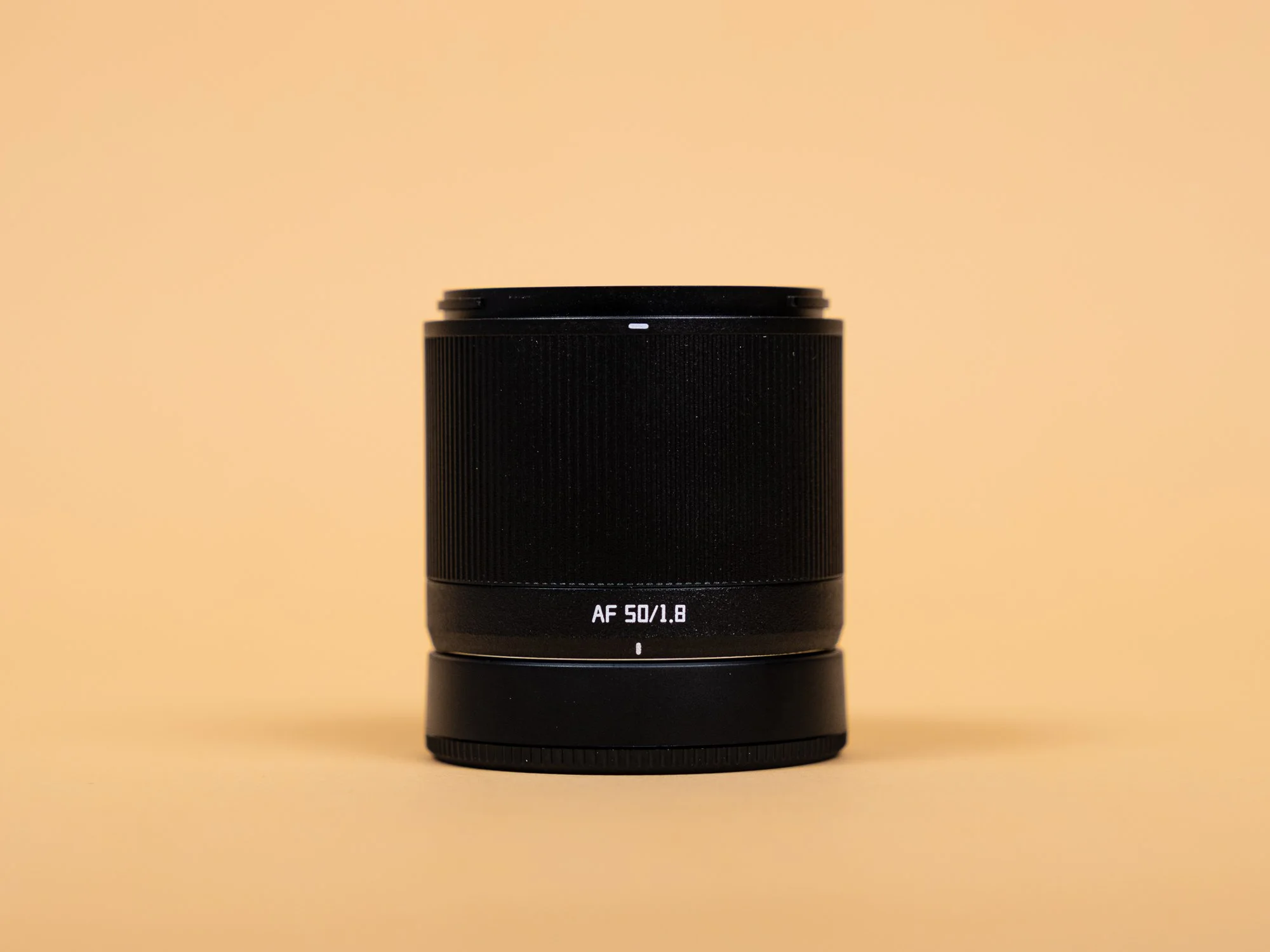
Review: TTArtisan 50mm f/1.8 Neo
A definitive review of the TTArtisan 50mm f/1.8 Neo lens for Full-Frame cameras.
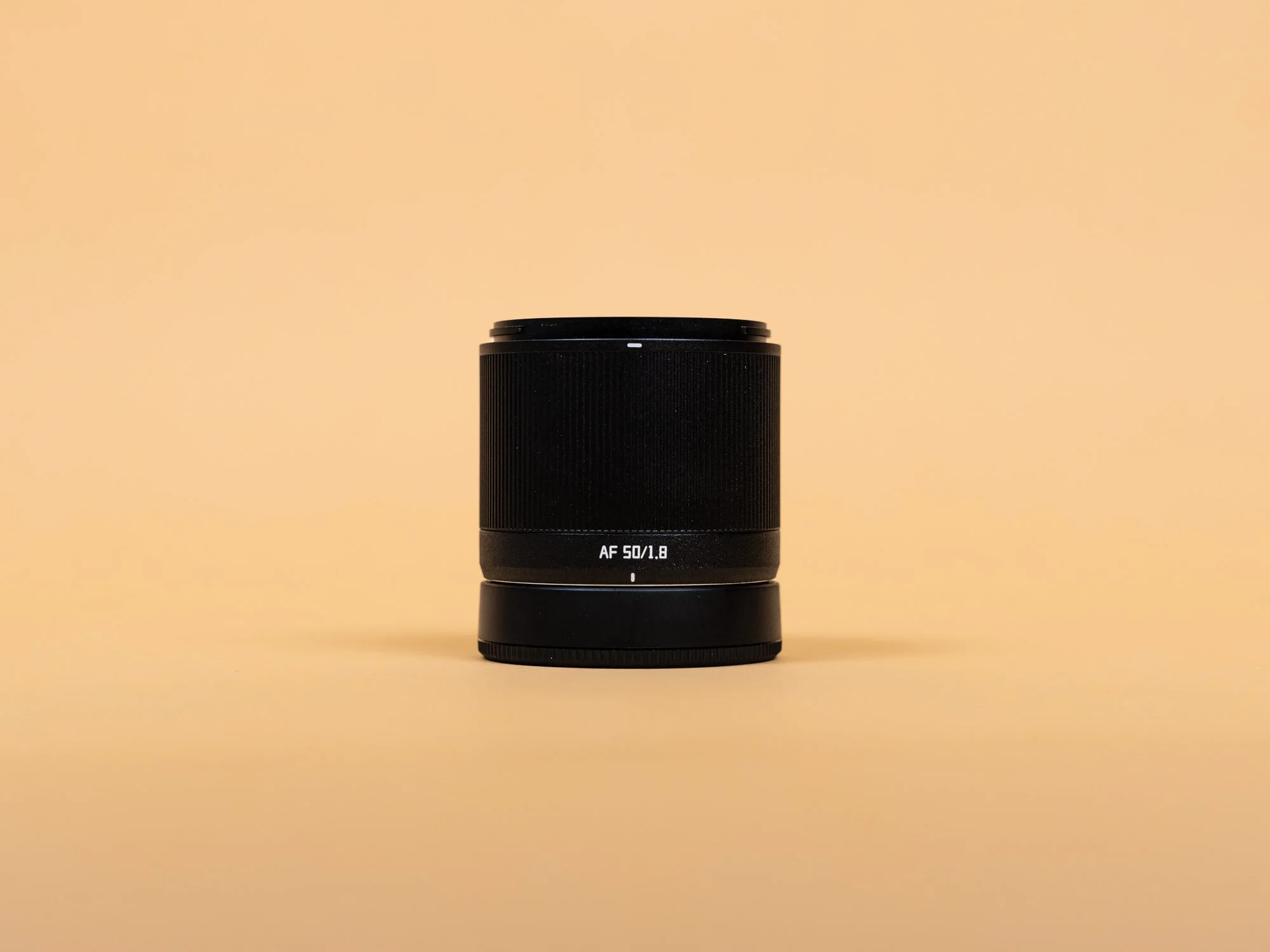
Intro
About a decade ago, as a broke film school student, I ran into a constant lens dilemma. I could save up for one expensive do-it-all lens, or I could go the budget route and acquire multiple third-party lenses full of compromises. If I wanted an affordable lens with autofocus and decent optics, I had very few places to turn.
Today, mirrorless shooters are almost spoiled for choice when it comes to budget lenses. TTArtisan is one of the brands that helped pave the way, giving photographers on a tight budget affordable glass without completely sacrificing image quality. After building its reputation on Leica-M manual focus lenses, the company moved into autofocus in 2022, and their new Neo series pushed their innovation even further. I tested their brand new TTArtisan AF 50mm f/1.8 Neo for two months.
This lens review is part of my Budget Lens Review series, where I test lenses under $200 USD to see if they’re actually usable. I also compare these budget options against more expensive premium lenses to find out whether spending the extra money is really worth it.
In the interest of transparency, TTArtisan sent me this lens free of charge for review. I paid for my own travel to test it, along with the other lenses I acquired to compare against this 50mm prime.
All images were shot with my Sony A7R VI, a 67-megapixel full-frame camera, to really test the optics of this lens.
Specs
Focal Length: 50mm
Mount: Sony E, Nikon Z, L Mount
Minimum Focus Distance: 48cm (0.48m)
Maximum Aperture: f/1.8
Minimum Aperture: f/16
Optical Construction: 12 elements in 8 groups (2 ED, 4 high-index); 7 diaphragm blades
Weight: 156g - 167g (Depending on mount)
Dimensions (Diameter x Length): 61mm x 51 mm (2.4" x 2.0") for Sony E
Filter Size: 52mm
Weather Sealing: None
Autofocus: STM stepping motor; eye and face detection
Price: $89 USD on B&H
Build Quality
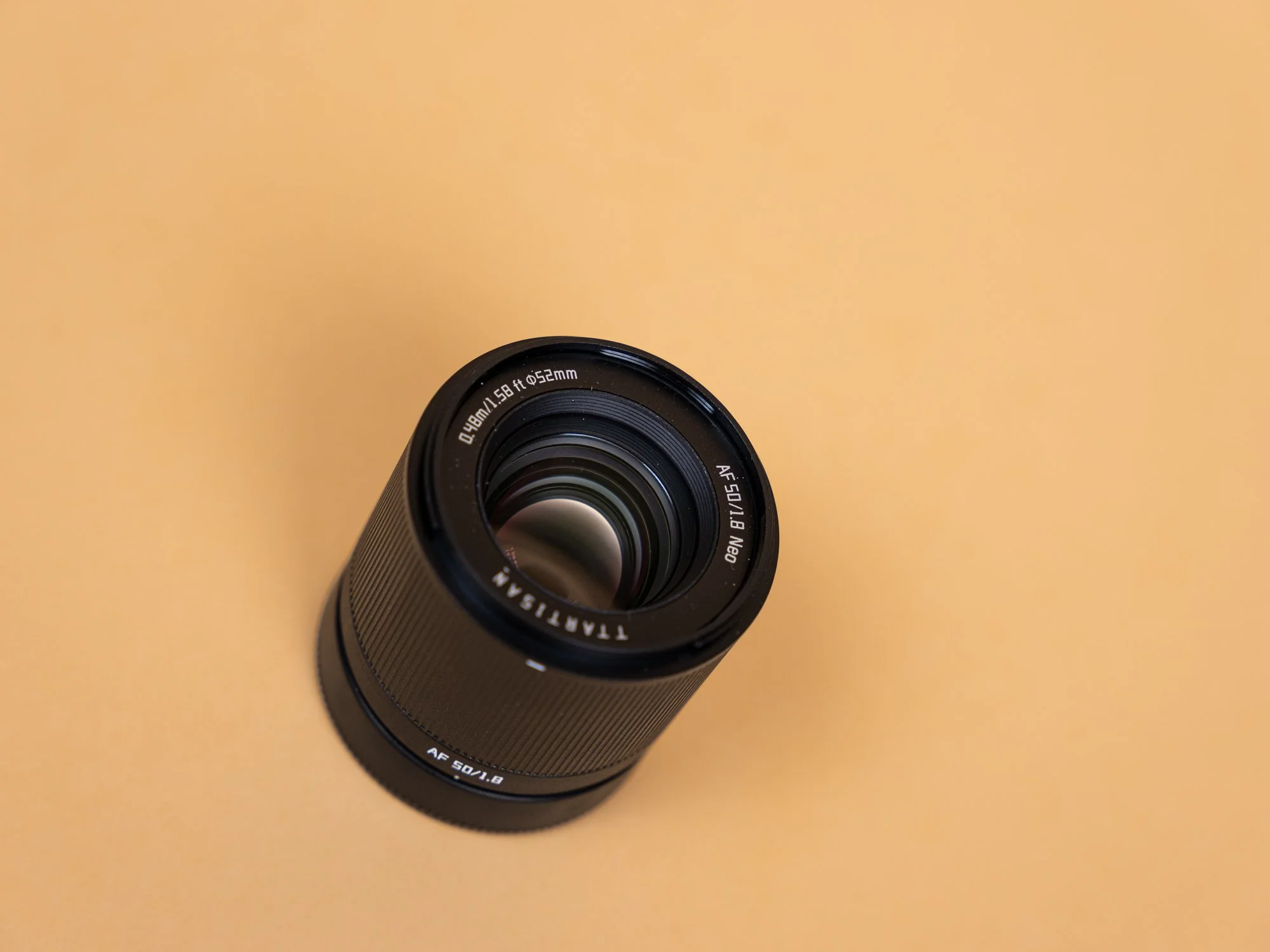
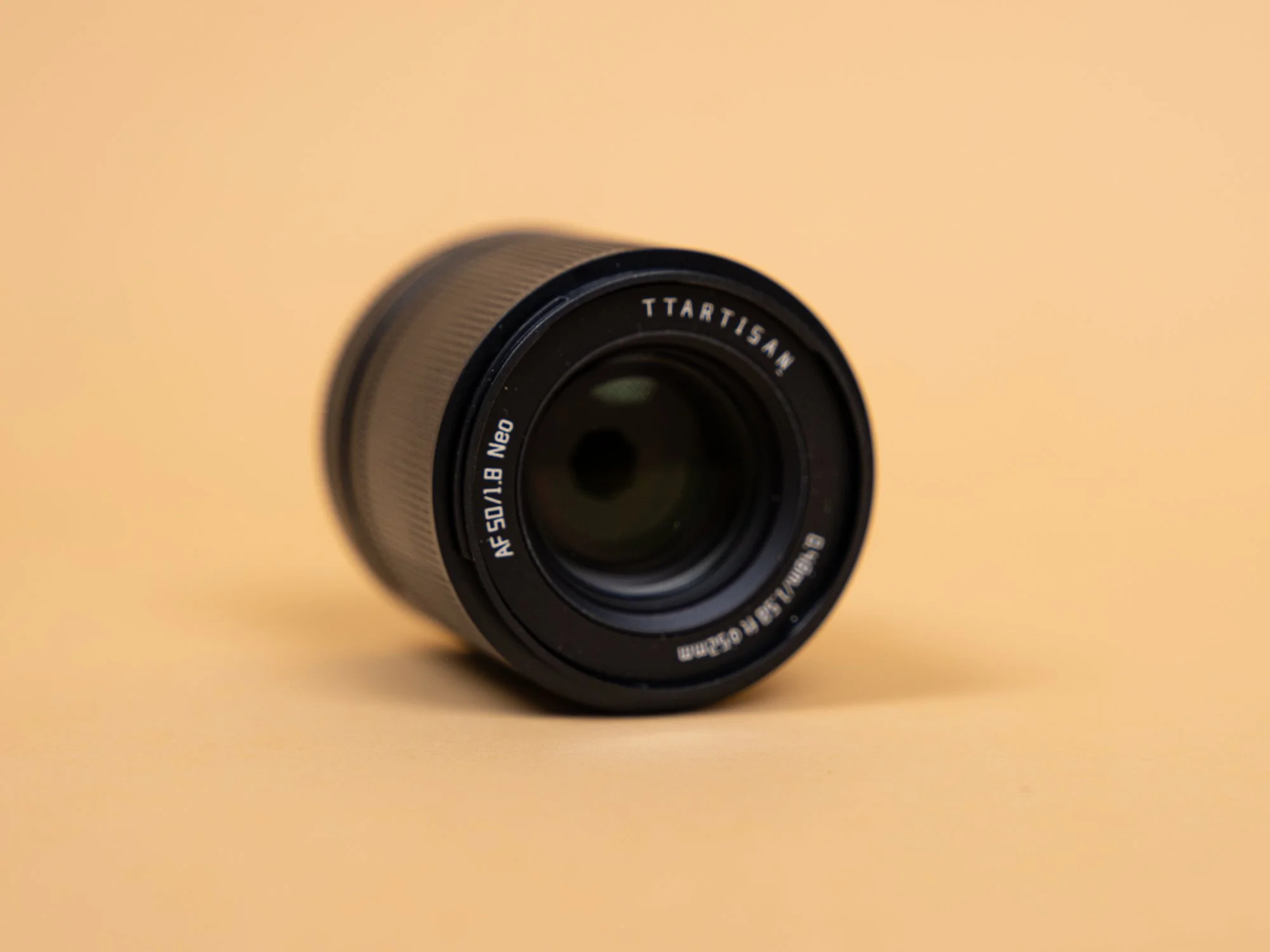
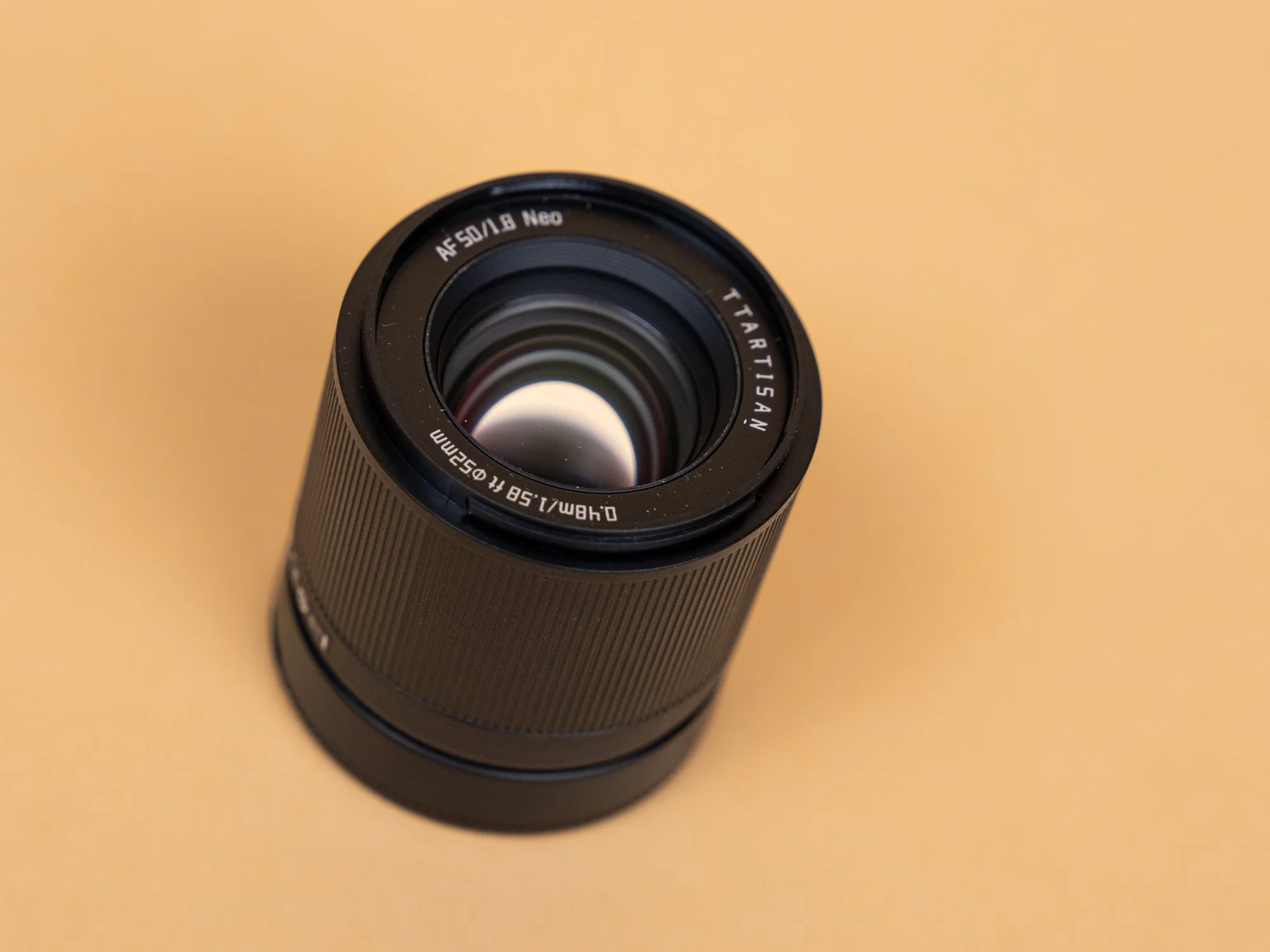
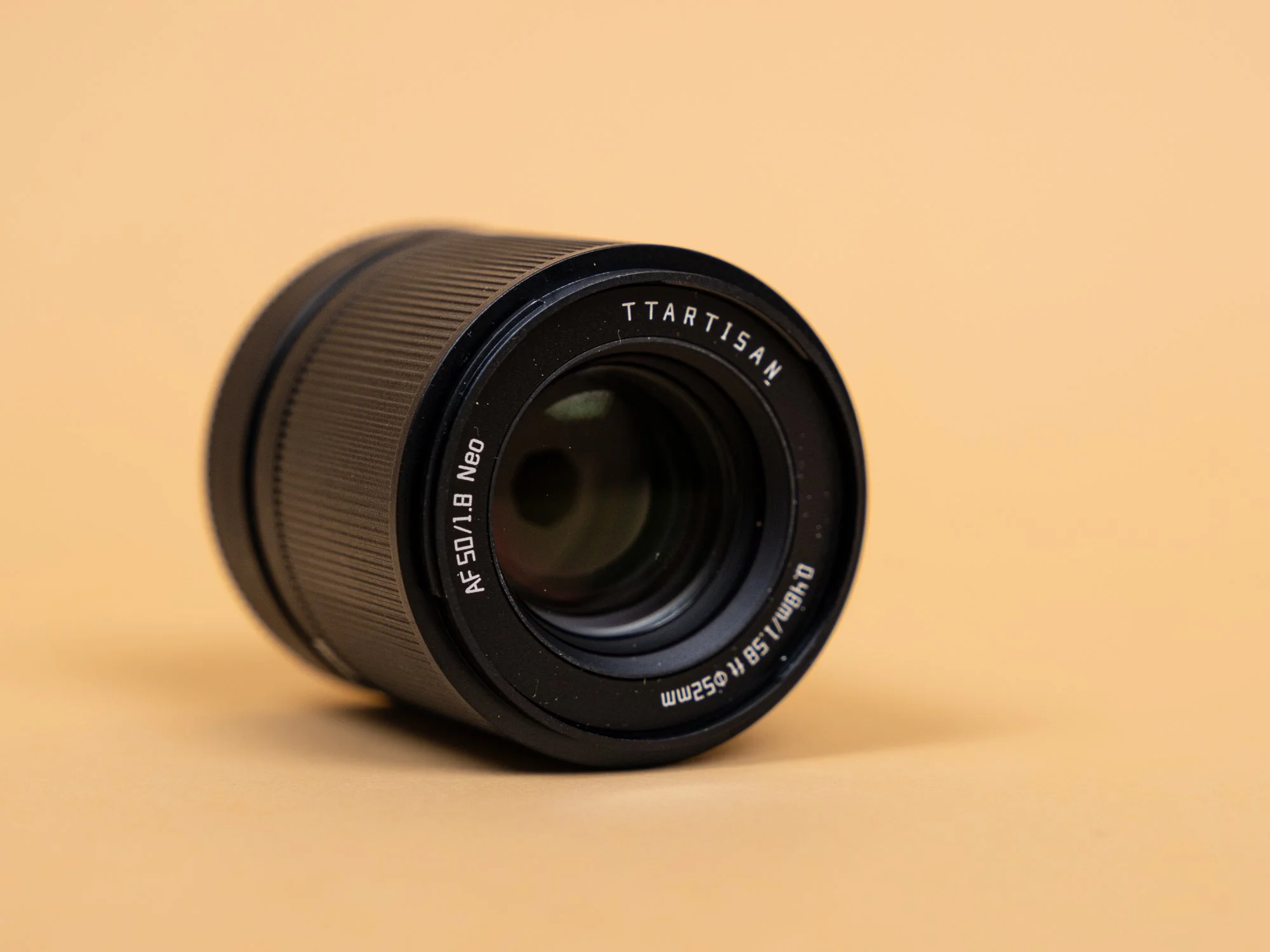
The TTArtisan AF 50mm f/1.8 Neo is built almost entirely from fiberglass composite, with the lens mount as the only metal component. It's lightweight, and in the hand it feels like a sturdy, well-made plastic.
TTArtisan is upfront about what this lens is: a budget 50mm prime. There are no switches, no buttons, and no rings for focus or aperture anywhere on the barrel. This is a true “nifty fifty”, a beginner-friendly autofocus prime designed to be shot in a point-and-shoot style, with every adjustment handled through the camera body.
The construction feels surprisingly solid, and I wouldn't worry much about damage from an accidental bump or drop. My biggest complaint is the lens hood, which is comically small and does very little to block flare. I'd mainly attach it to protect the front element from scratches while carrying the lens around.
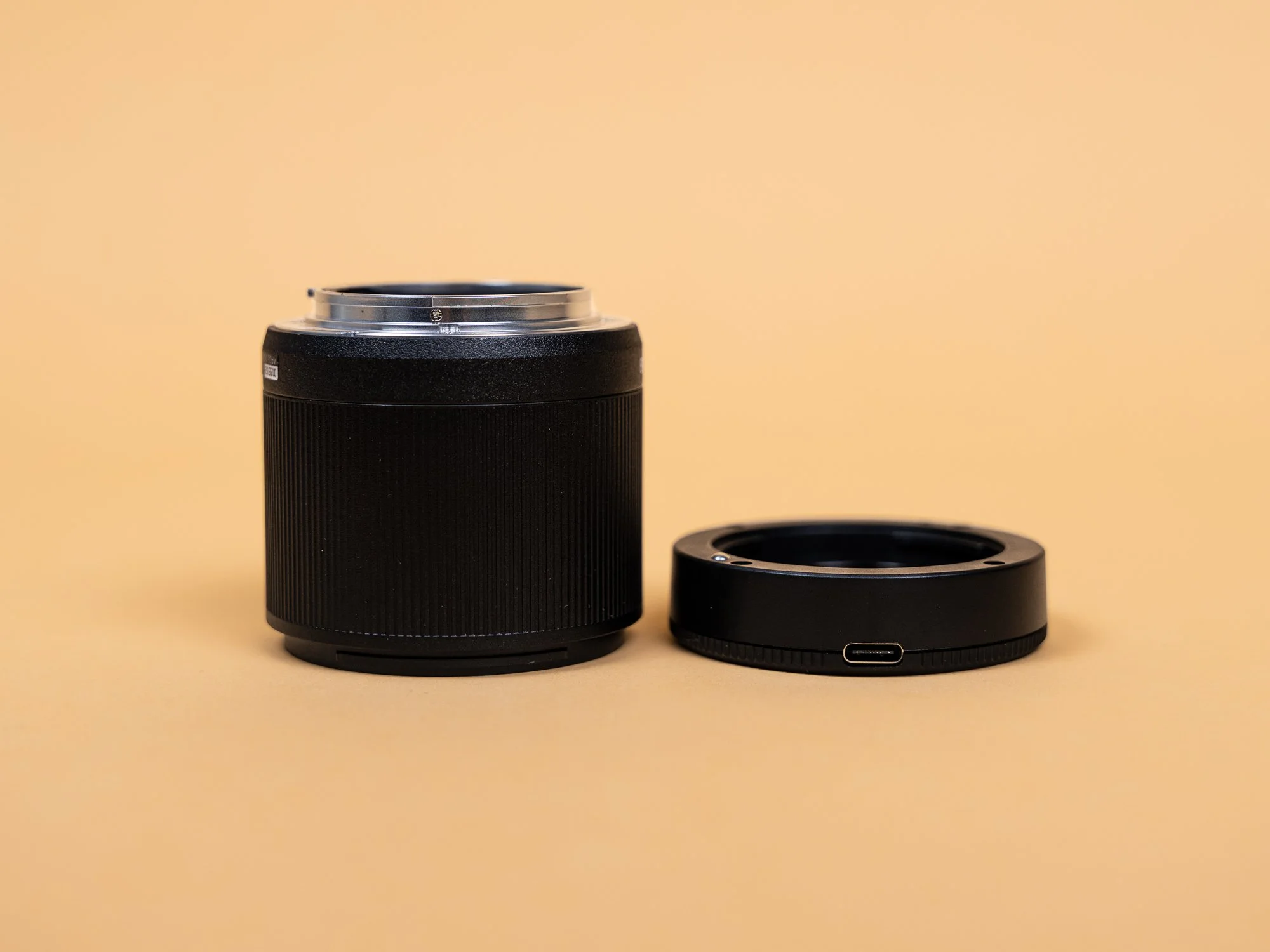
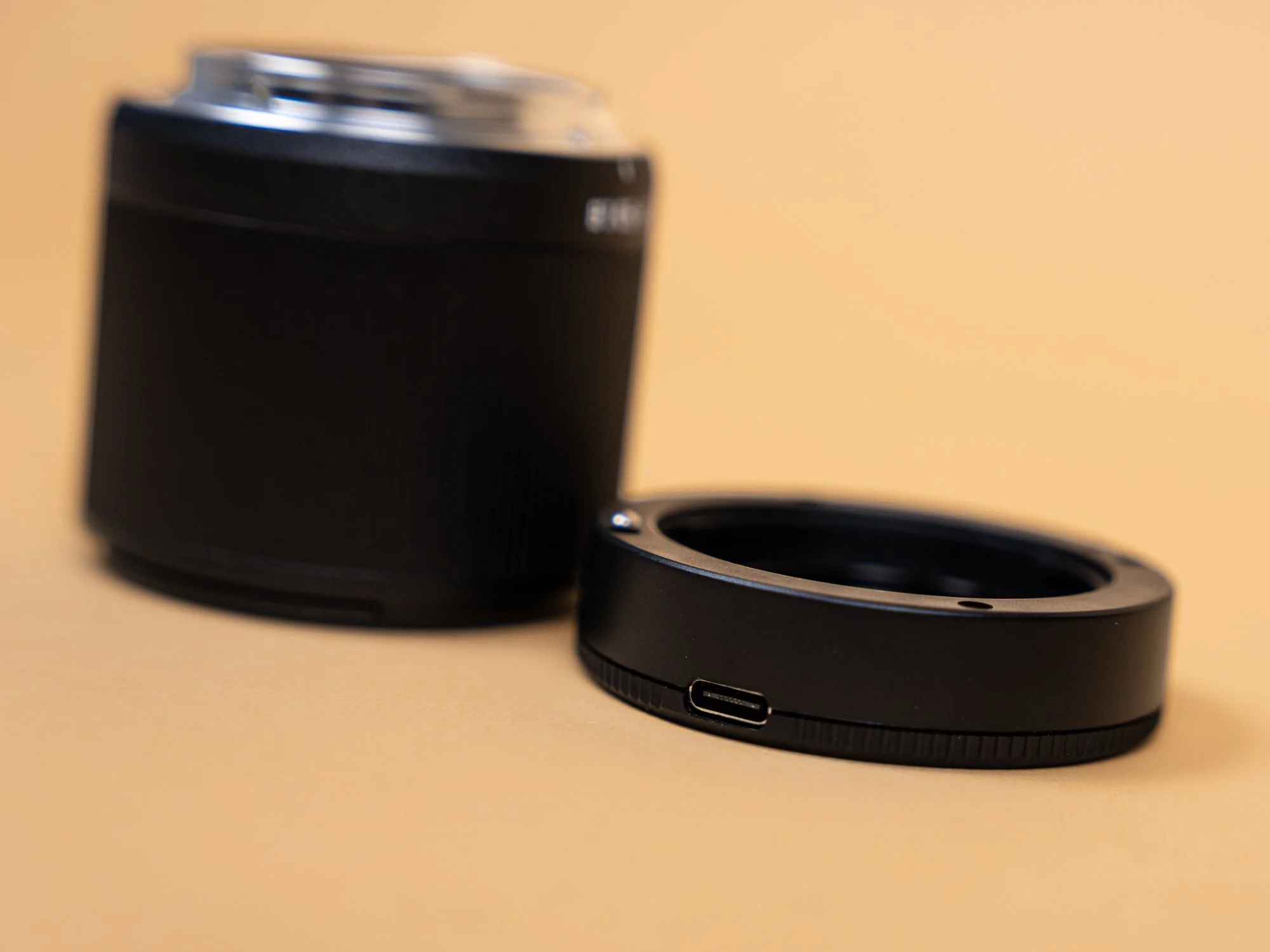
The rear lens cap has a built-in USB-C port for updating the lens firmware. Firmware support is always a welcome inclusion, especially for keeping a lens compatible as new camera bodies come out. The placement of the USB-C port is a bit puzzling. A port on the lens itself is far more practical, since putting it on the rear cap means you have to keep track of this specific cap. Mix it up with the caps from your other lenses and you lose the ability to update firmware until you find it again.
The rear cap also feels loose when twisting it on to lock. It's easy to brush against it and accidentally unscrew it. Even when it's fully attached, it never feels completely secure on the lens and has a slight wiggle.
As of November 8, 2026 the only firmware update available for this lens is for the L Mount version.
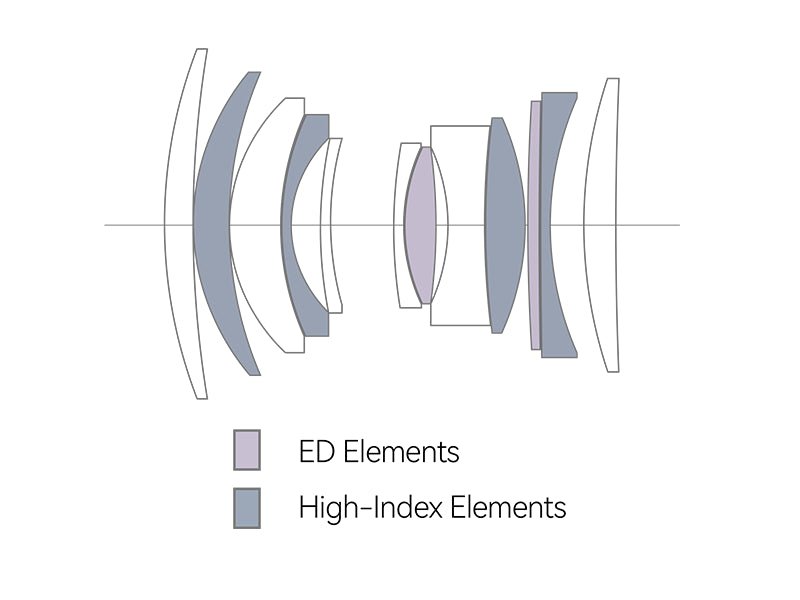
The optical design uses 12 elements in 8 groups, including 2 ED (extra-low dispersion) elements to control color fringing and 4 high-index elements that help keep the lens compact while correcting aberrations. Fitting this much specialty glass into an $89 lens is impressive on paper, especially in a body that weighs around 156 grams.
The aperture uses 7 diaphragm blades, which is typical for a budget prime, so expect bokeh balls to take on a slightly polygonal shape as you stop down. The front filter thread is 52mm, a common size for compact primes, though premium filter brands tend to prioritize larger diameters like 67mm, 77mm, and 82mm.
The TTArtisan AF 50mm f/1.8 Neo comes in three colors: Black, Green, and Titanium. The finishes are purely cosmetic, and all three share the same construction and optics.
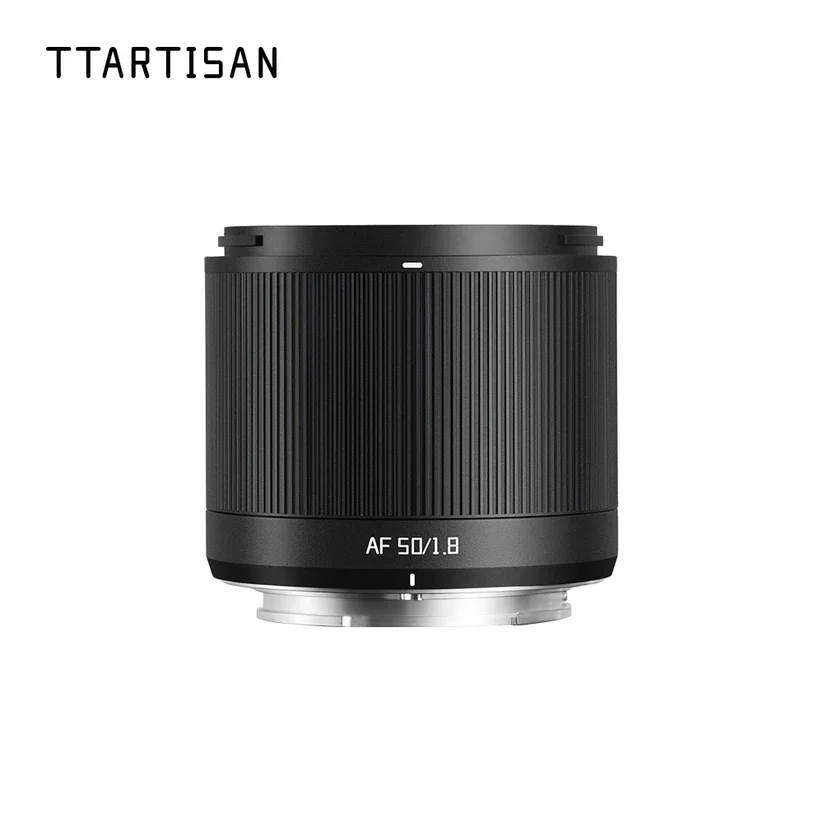
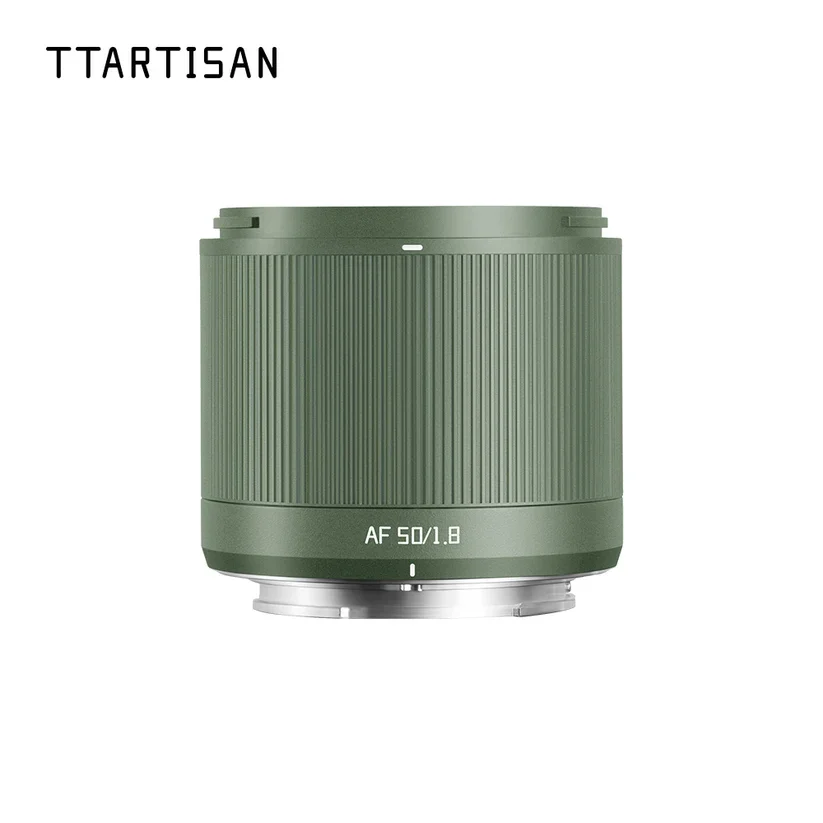
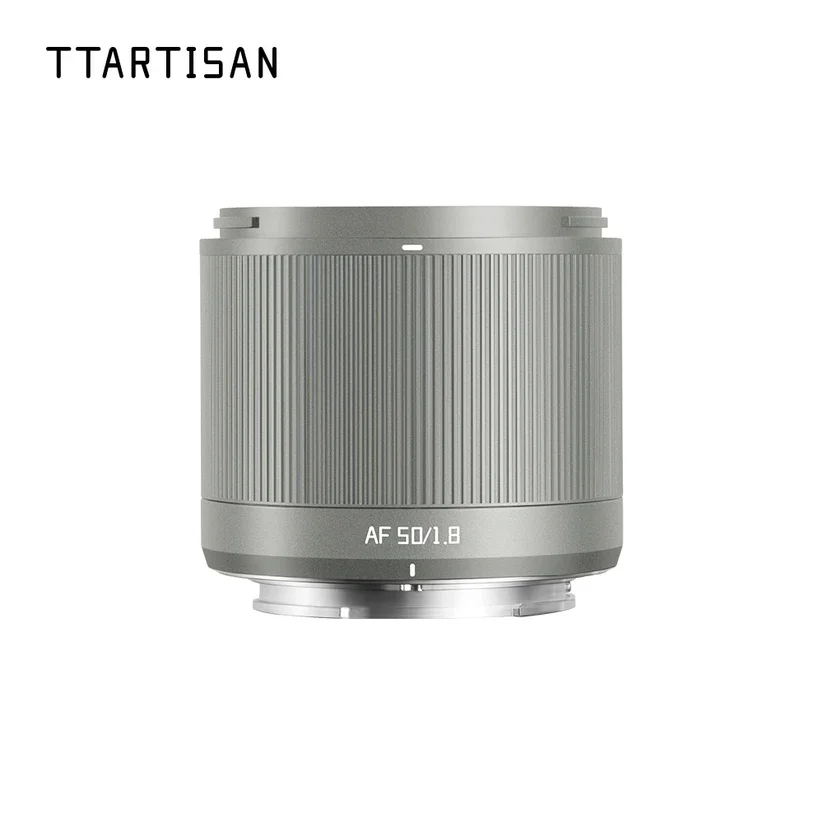
Images courtesy of TTArtisan (TTArtisan.com)
For a fun twist, TTArtisan designed the barrel to accept slip-on 3D-printed lens shells. The company provides downloadable 3D model files here. The files are available for the Sony E and Nikon Z versions, while the L-Mount version reportedly isn’t supported. I haven’t printed a shell myself, but it’s a nice little addition for those who like customization.
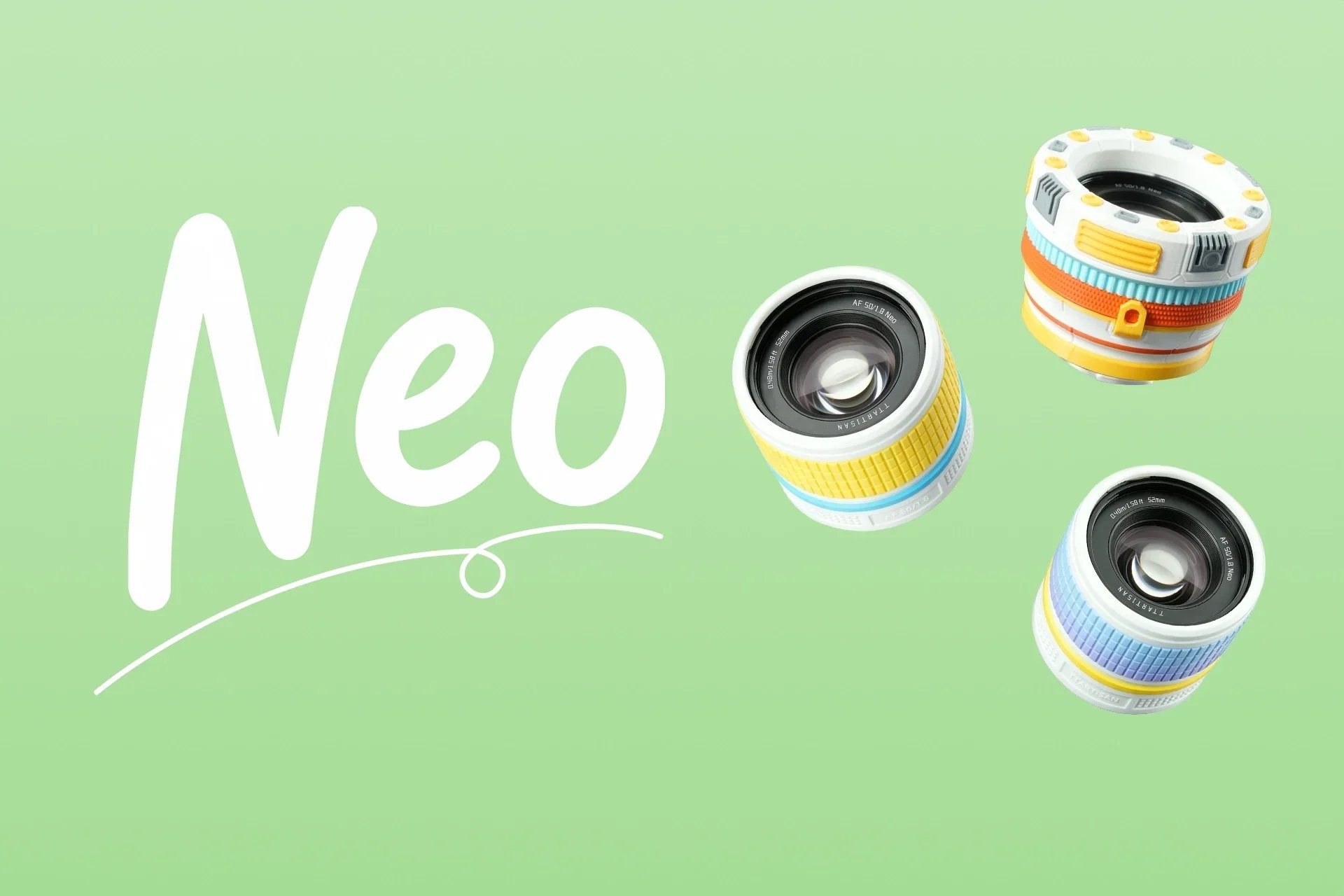
Image courtesy of TTArtisan (TTArtisan.com)
Another important caveat is the lack of weather sealing. Neither the barrel nor the mount has any protection against dust or moisture, so take extra care at the beach or if you get caught in the rain. I wish TTArtisan had added a simple rubber gasket to the mount, though at $89, it's clear the company trimmed every possible cost to hit that price.
Performance
If I’d had this lens ten years ago, I would have happily traded my single Canon 50mm f/1.8 for a full set of Neo primes. It’s a perfectly capable lens for everyday photography and video. The autofocus, handling, and image quality all held up well enough that nothing ever felt like a dealbreaker.
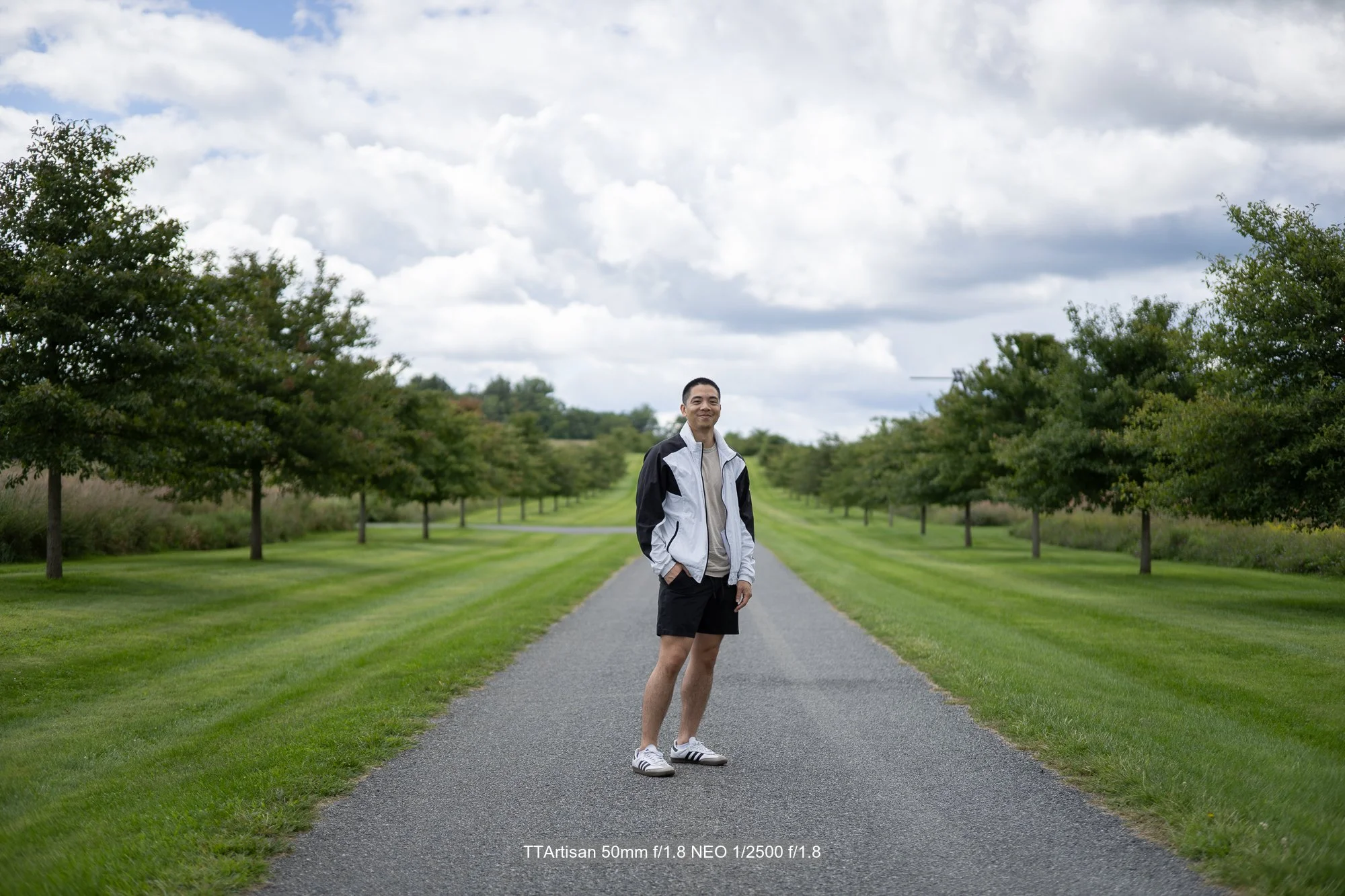
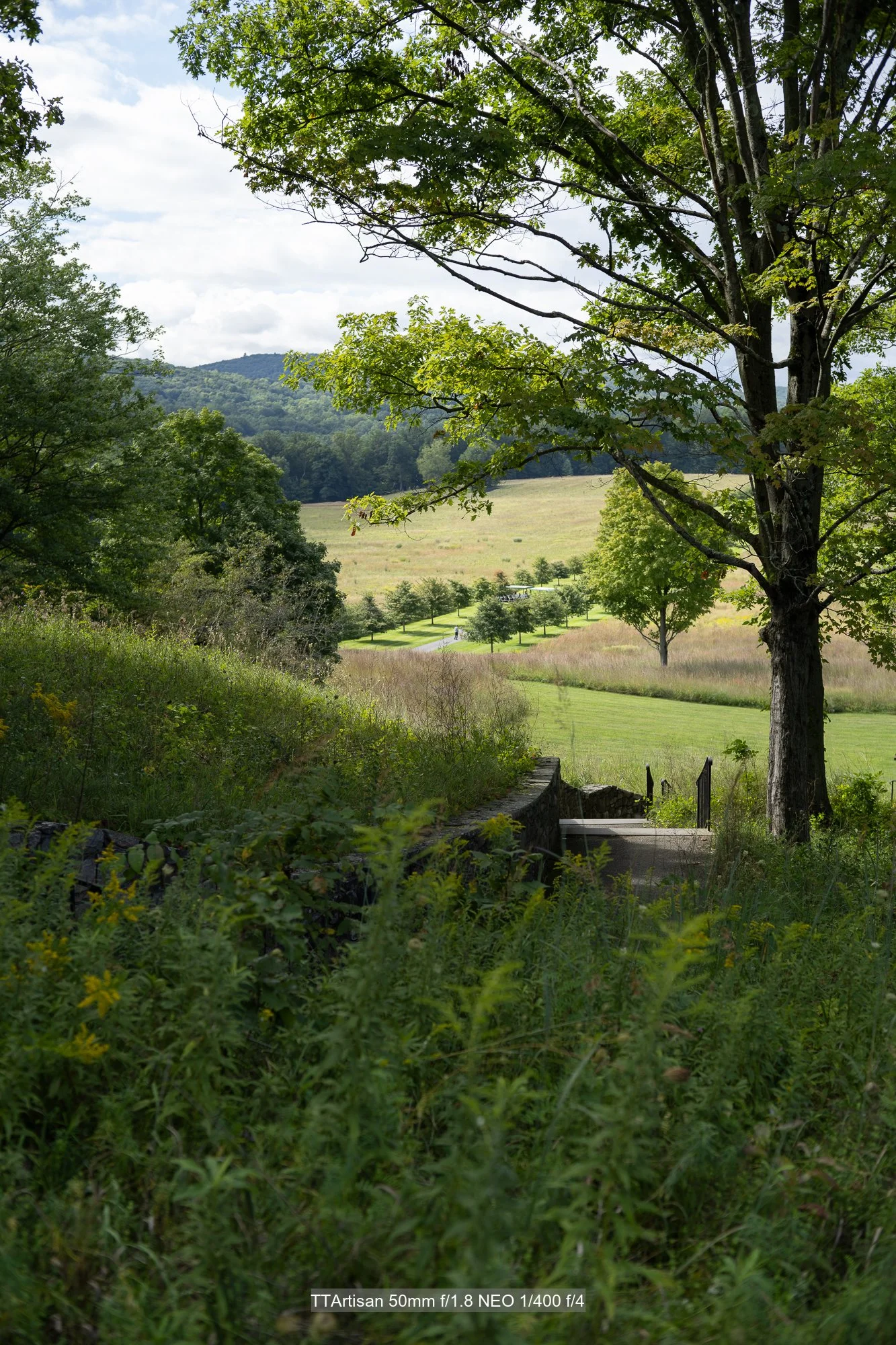
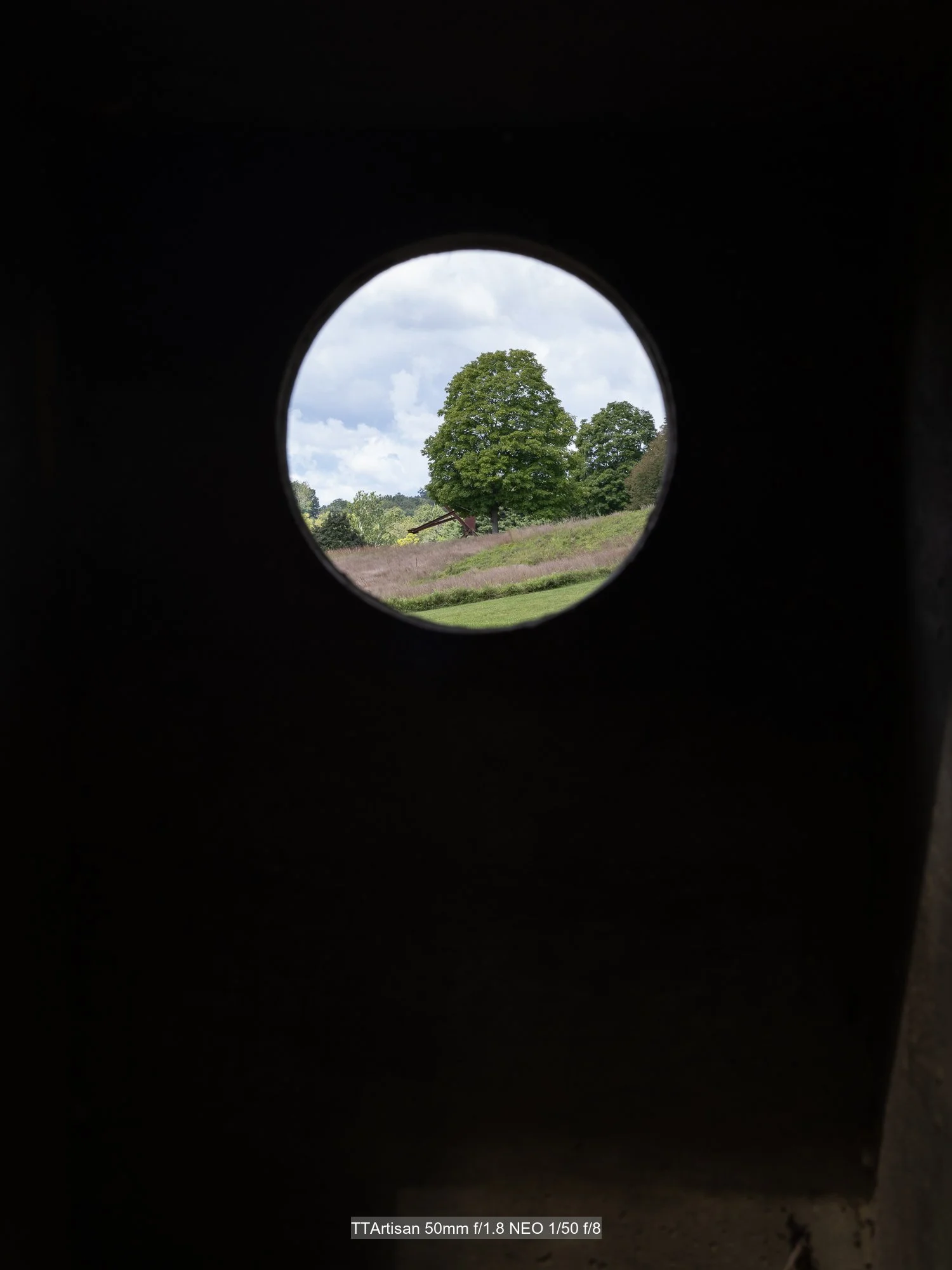
I brought it on a trip upstate and carried it around New York City, shooting casual street photos, portraits, and landscapes along the way.

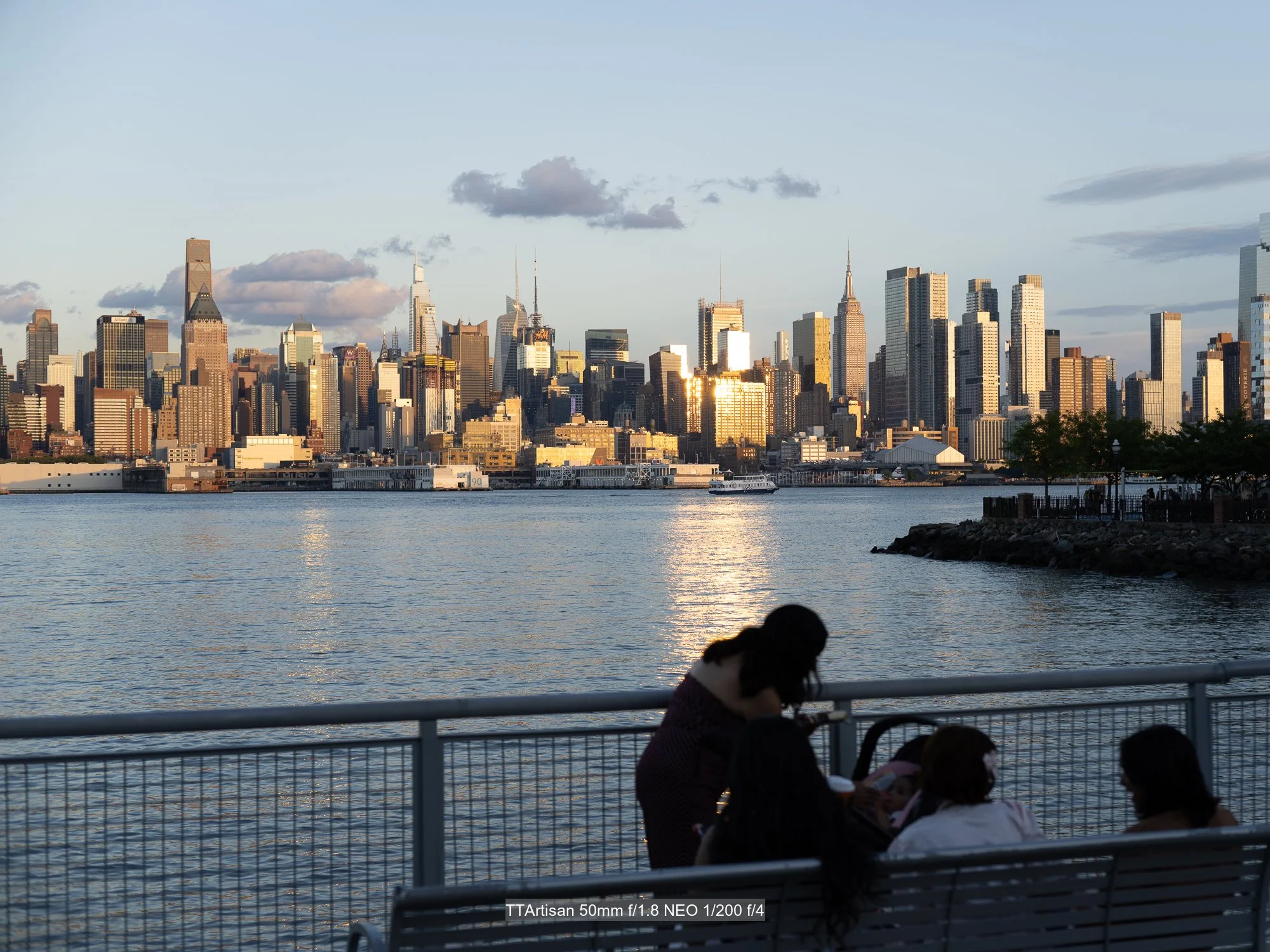

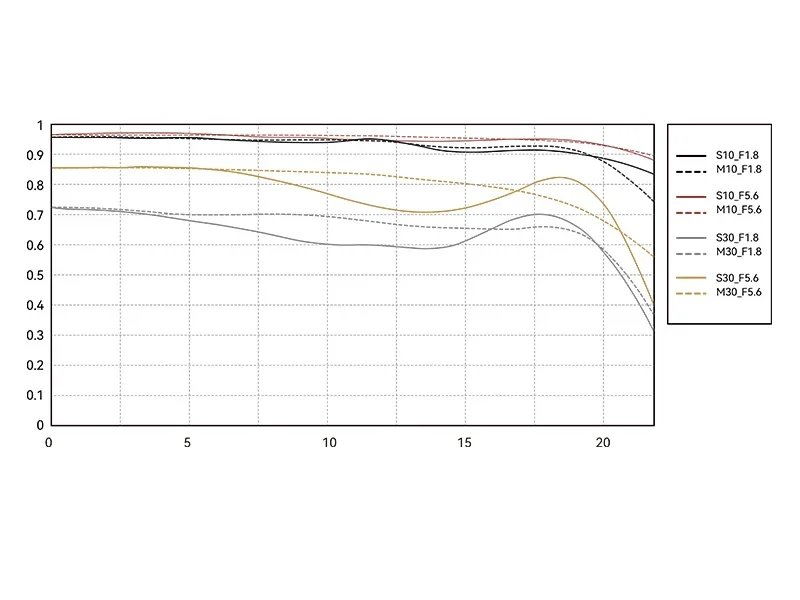
Center sharpness at f/1.8 is soft, and image quality falls off further toward the edges of the frame. Chromatic aberration and vignetting are both obvious wide open, which is surprising given that TTArtisan built two ED elements into the optical design specifically to control color fringing.
Shooting at f/1.8 also introduces a halation effect around the brightest parts of the frame. In the example images below, the highlights take on a soft glow and begin to clip. This is the most noticeable trade-off when shooting at wider apertures. With budget coatings and optics, expect some compromises in flare control and sharpness.



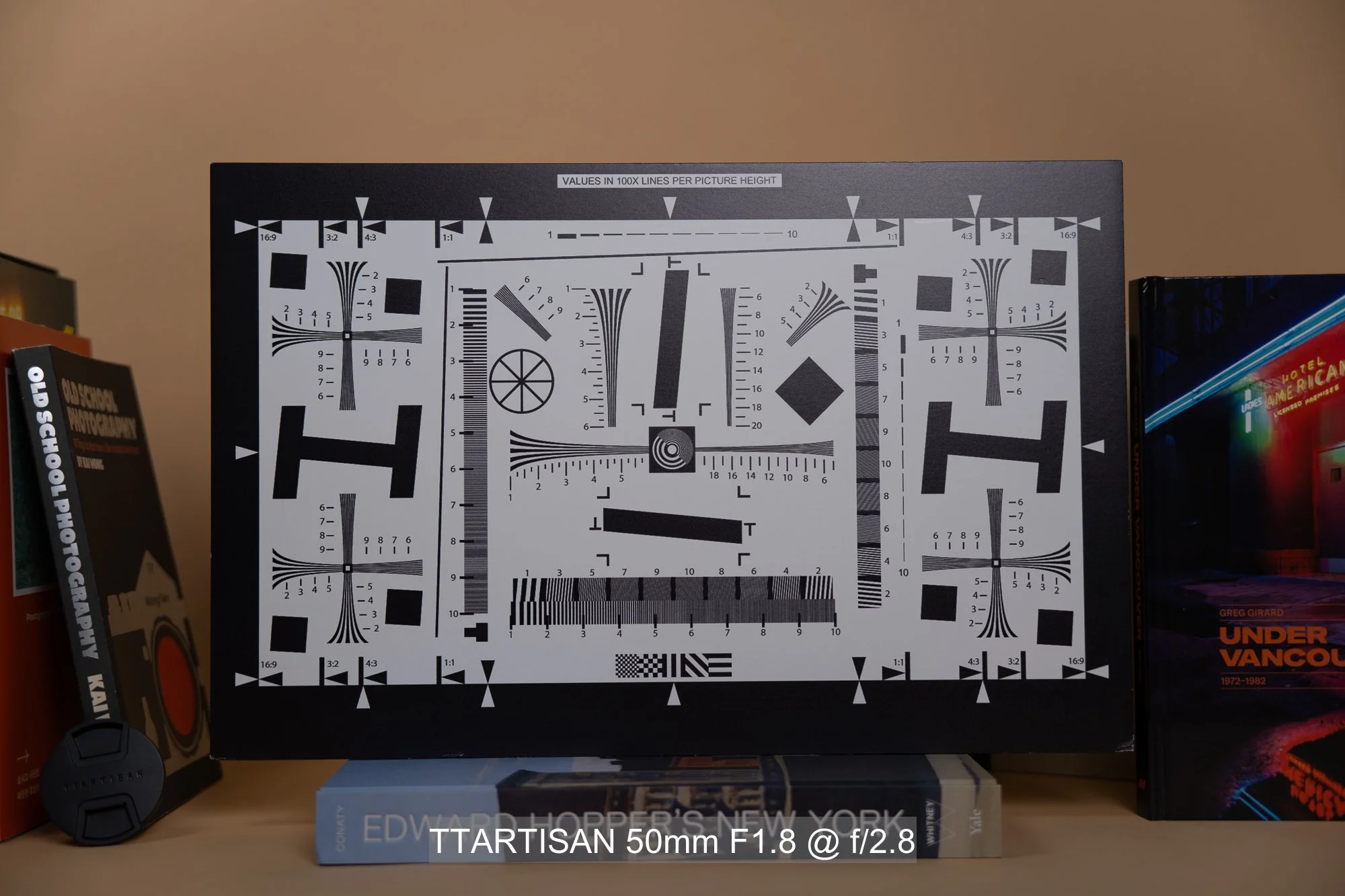
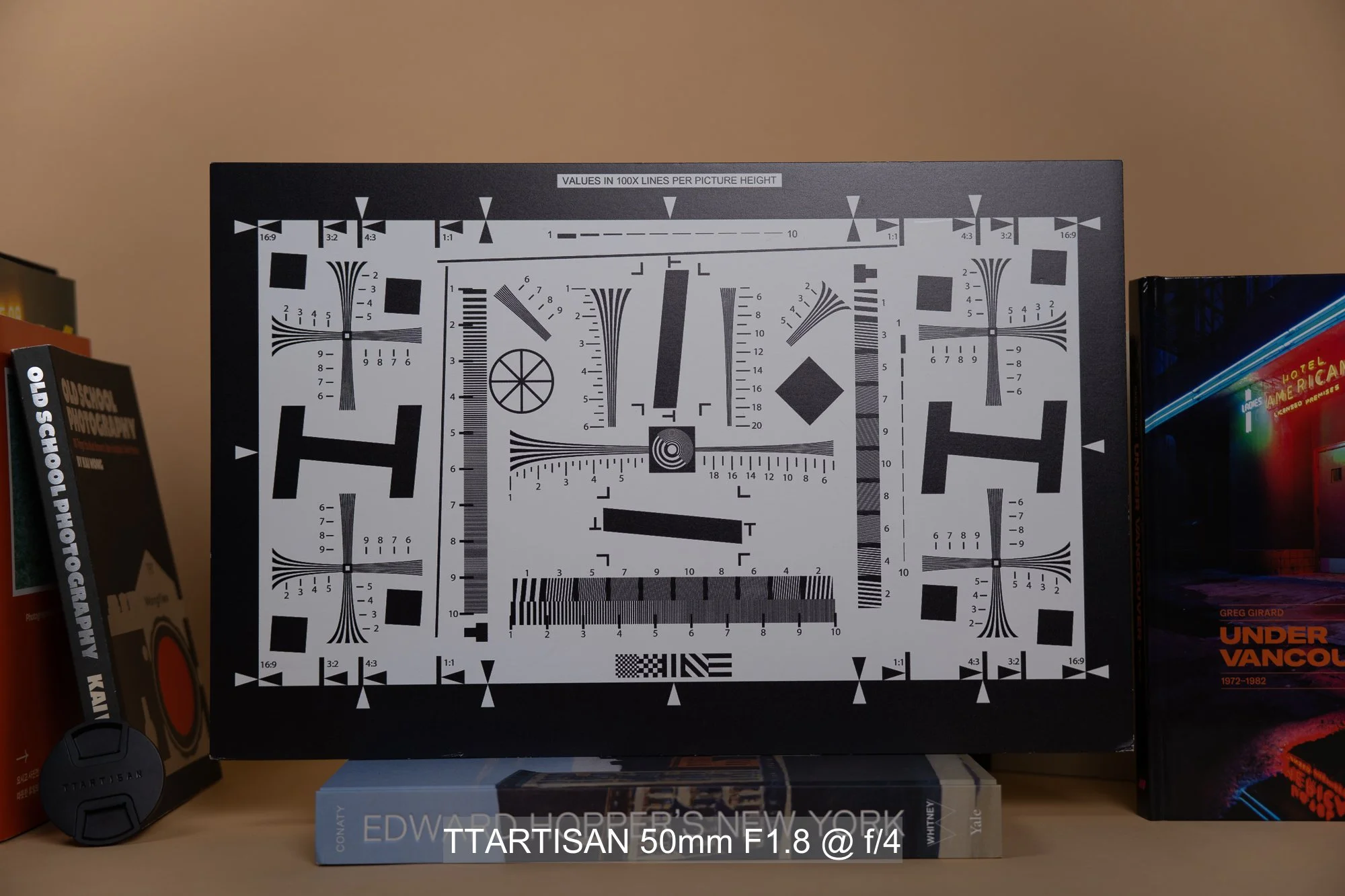
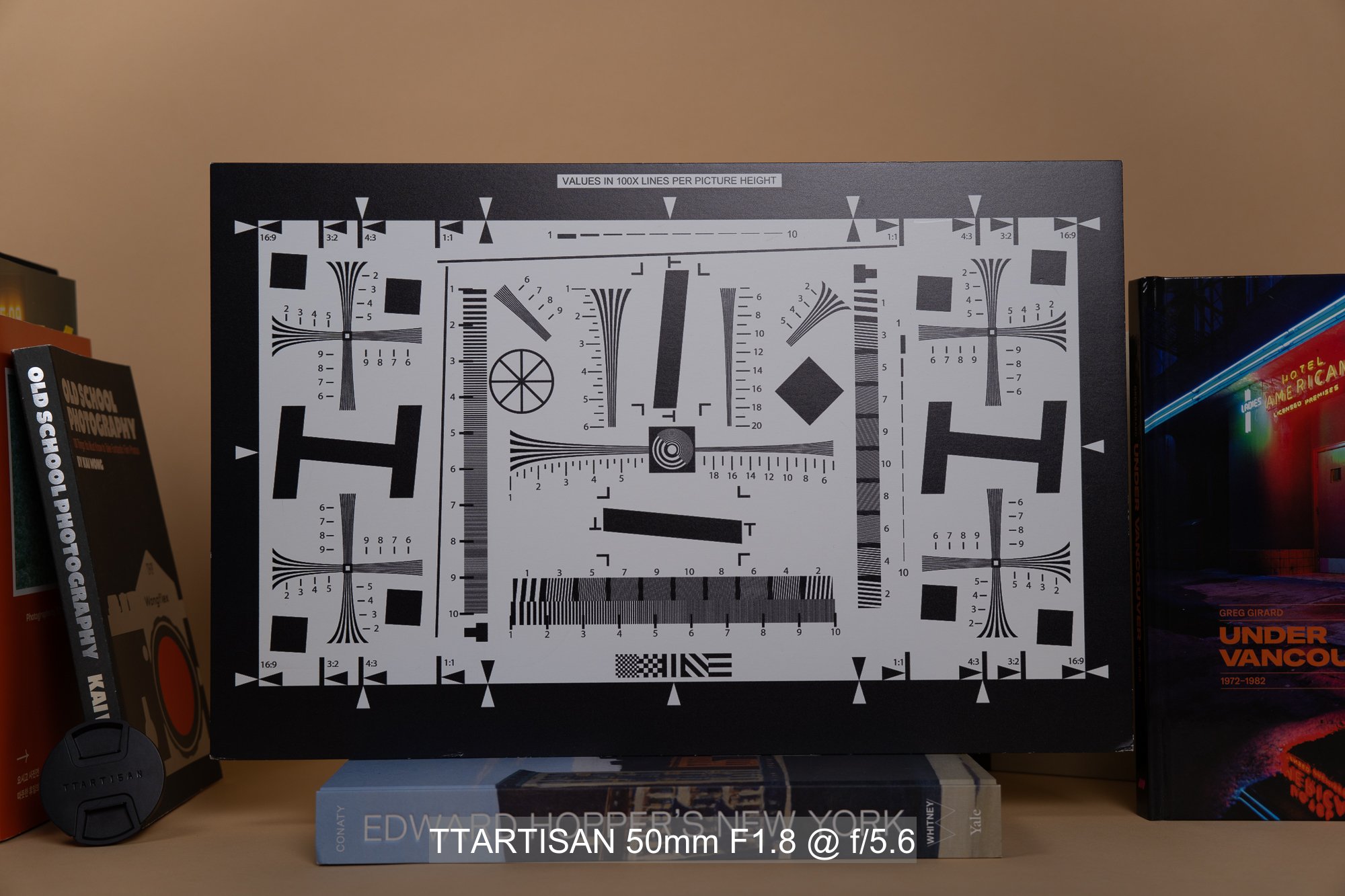
The sweet spot is f/4, where sharpness becomes solid and chromatic aberration and vignetting largely clean up. This is a lens best enjoyed without pixel peeping, and the portraits I shot between f/1.8 and f/2.8 look great on a phone screen, which is where most of these photos will end up anyway.
MTF Chart
Autofocus:
For still photography, autofocus is decent and locks on reliably in good light. Speed sits on the slower side for a third-party lens, so temper your expectations if you’re coming from more expensive glass.
Video is where the lens shows its limits. When racking quickly between subjects, the TTArtisan pauses to double-check focus before settling on the new focal plane.
Tap-To-Focus AF
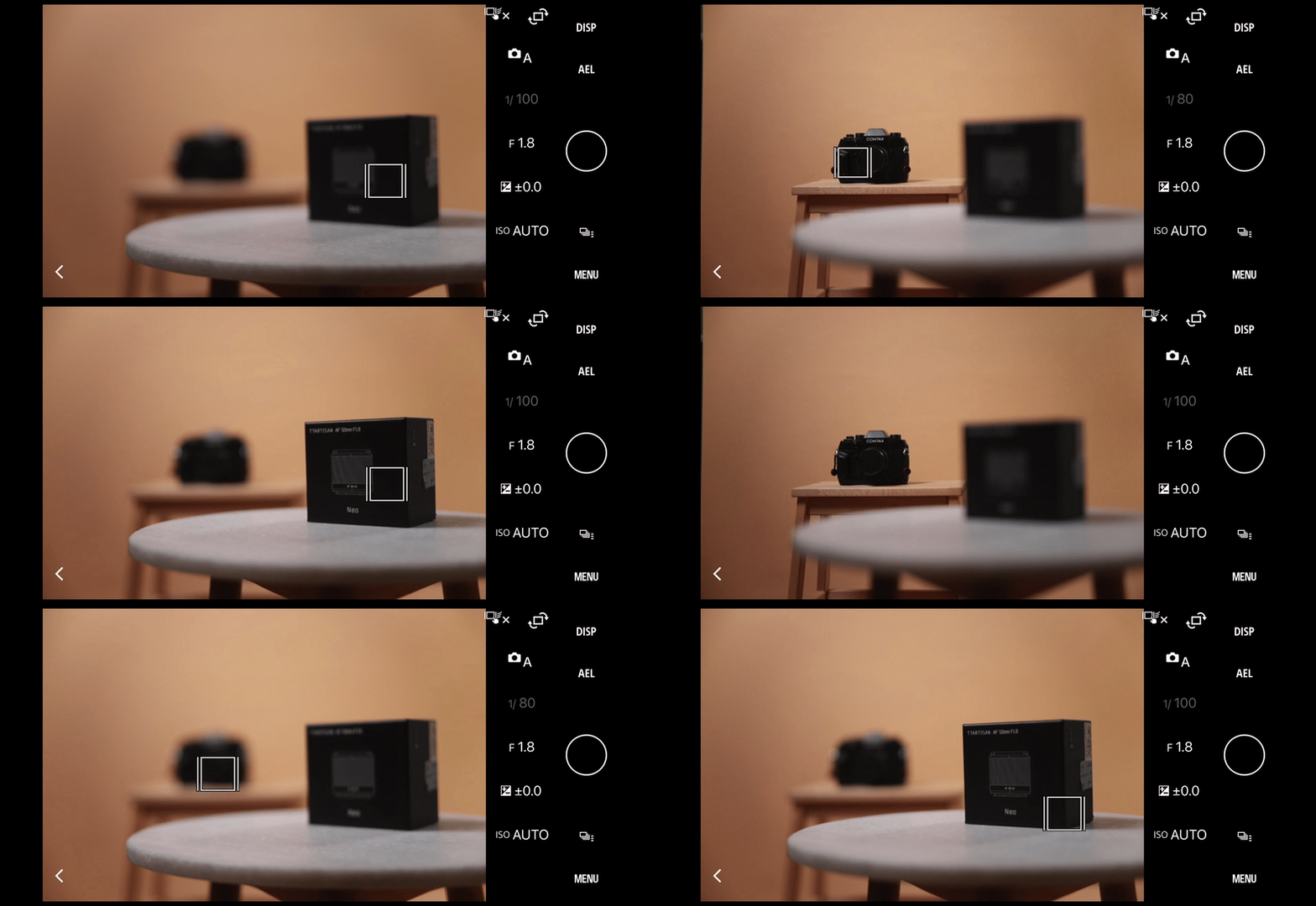
Notice the TTArtisan taking a moment to adjust before it locks focus. For video, I’d avoid situations that require fast transitions between subjects. Once the lens is locked onto a single subject for the duration of a shot, it holds focus well.
Sharpness:
As I mentioned earlier, the TTArtisan is soft wide open, which is a fair trade-off for an $89 lens.
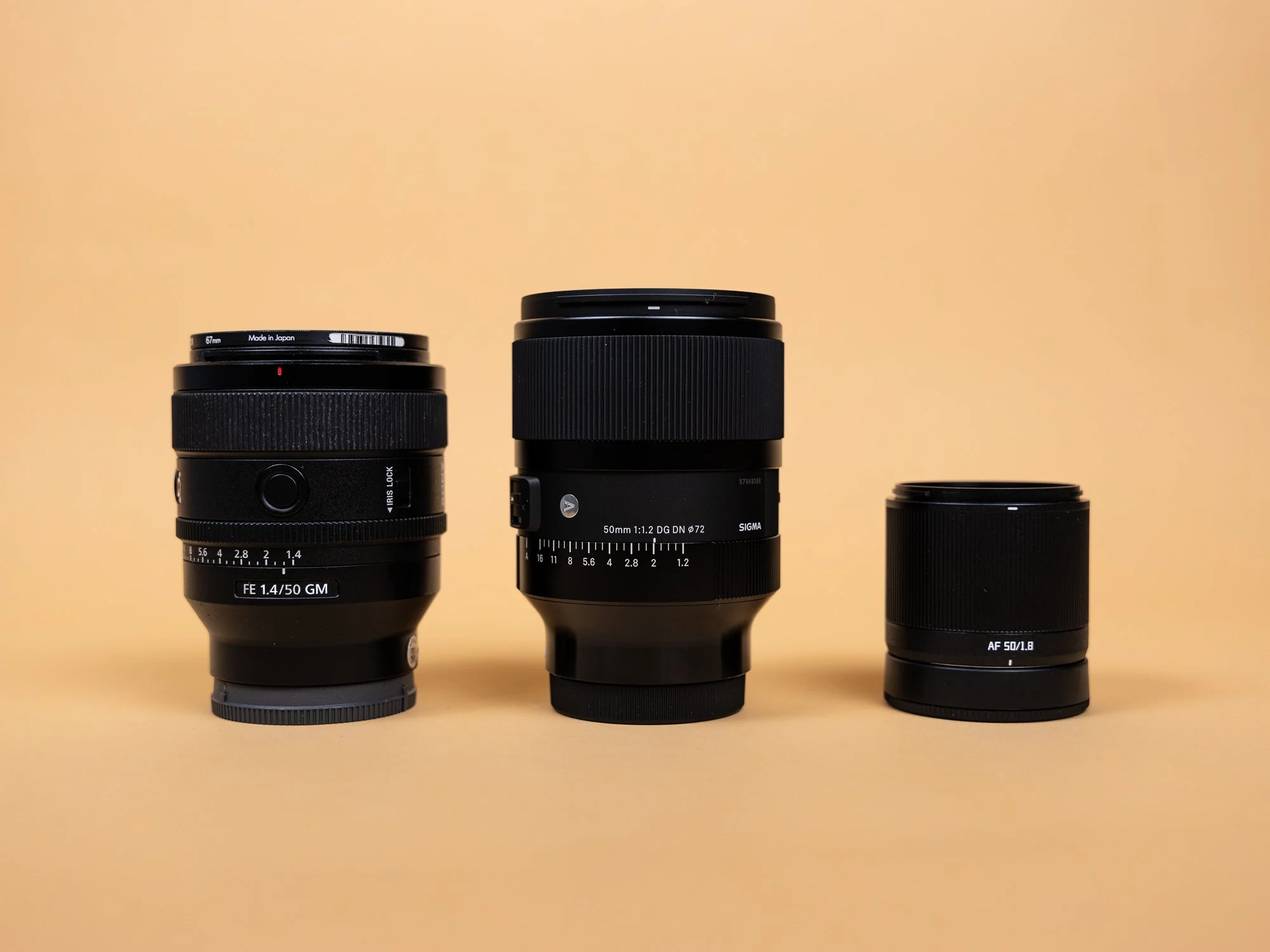
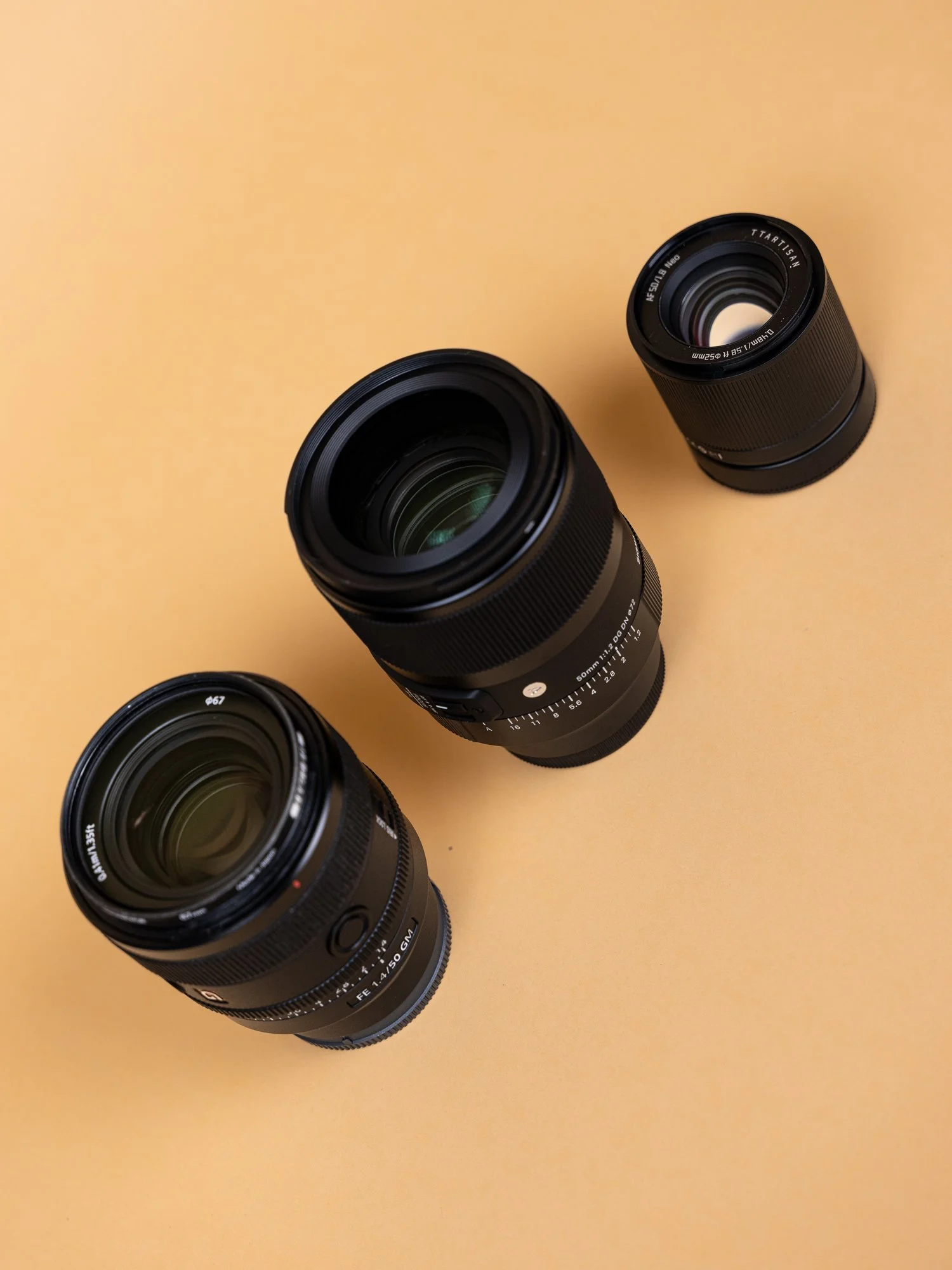
For a fun test, I put the TTArtisan AF 50mm f/1.8 Neo up against two of the best 50mm primes available for Sony E-mount: the Sony FE 50mm f/1.4 GM and the Sigma 50mm f/1.2 DG DN Art. Both cost well over ten times as much as the TTArtisan. To keep the comparison fair, I shot every test at f/1.8, the TTArtisan's widest aperture.
Size comparison between the three 50mm prime lenses.
Sony 50 1.4 GM vs Sigma 50 f1.2 Art vs TTArtisan 50 f1.8 @ f/1.8
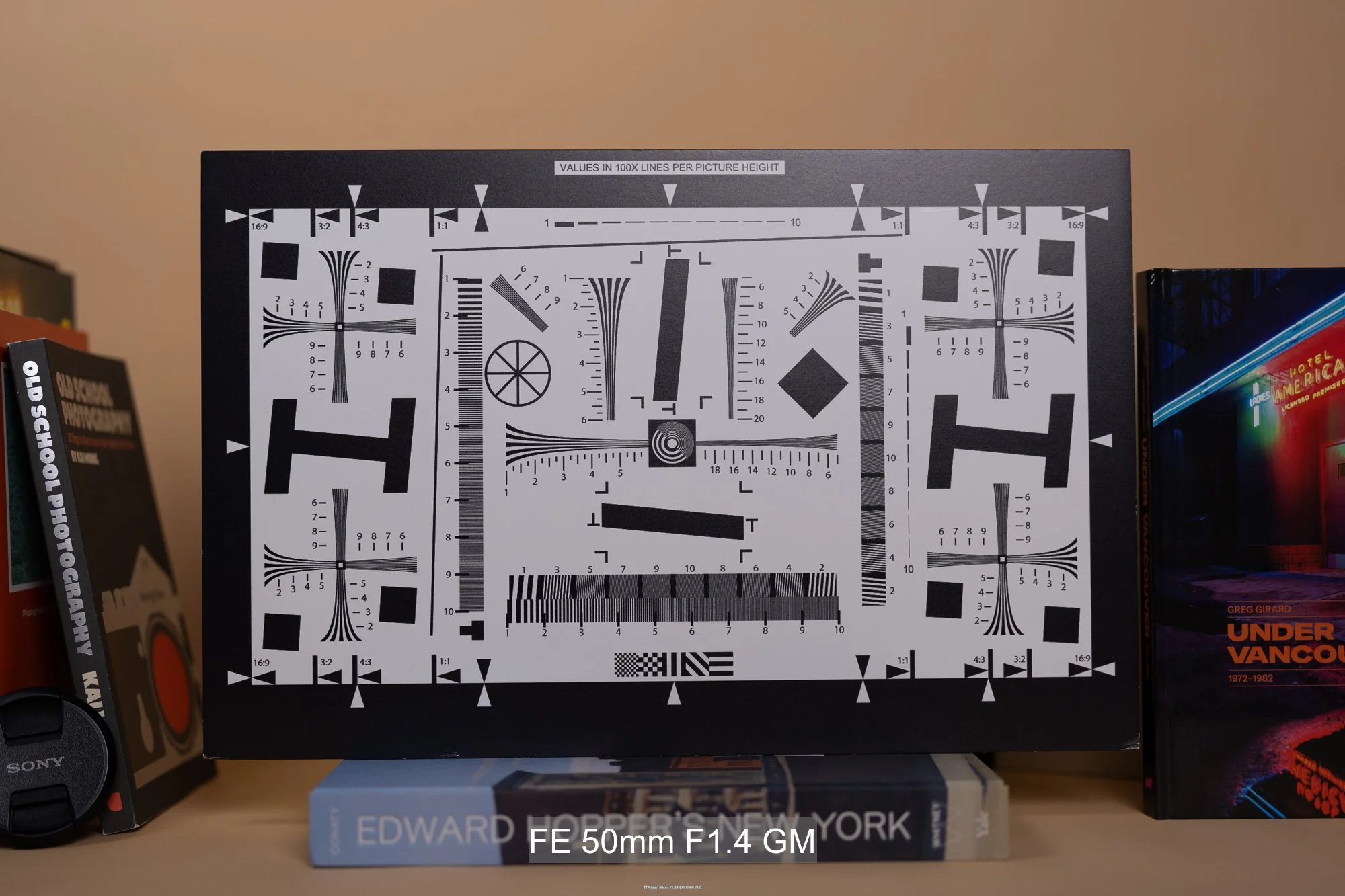
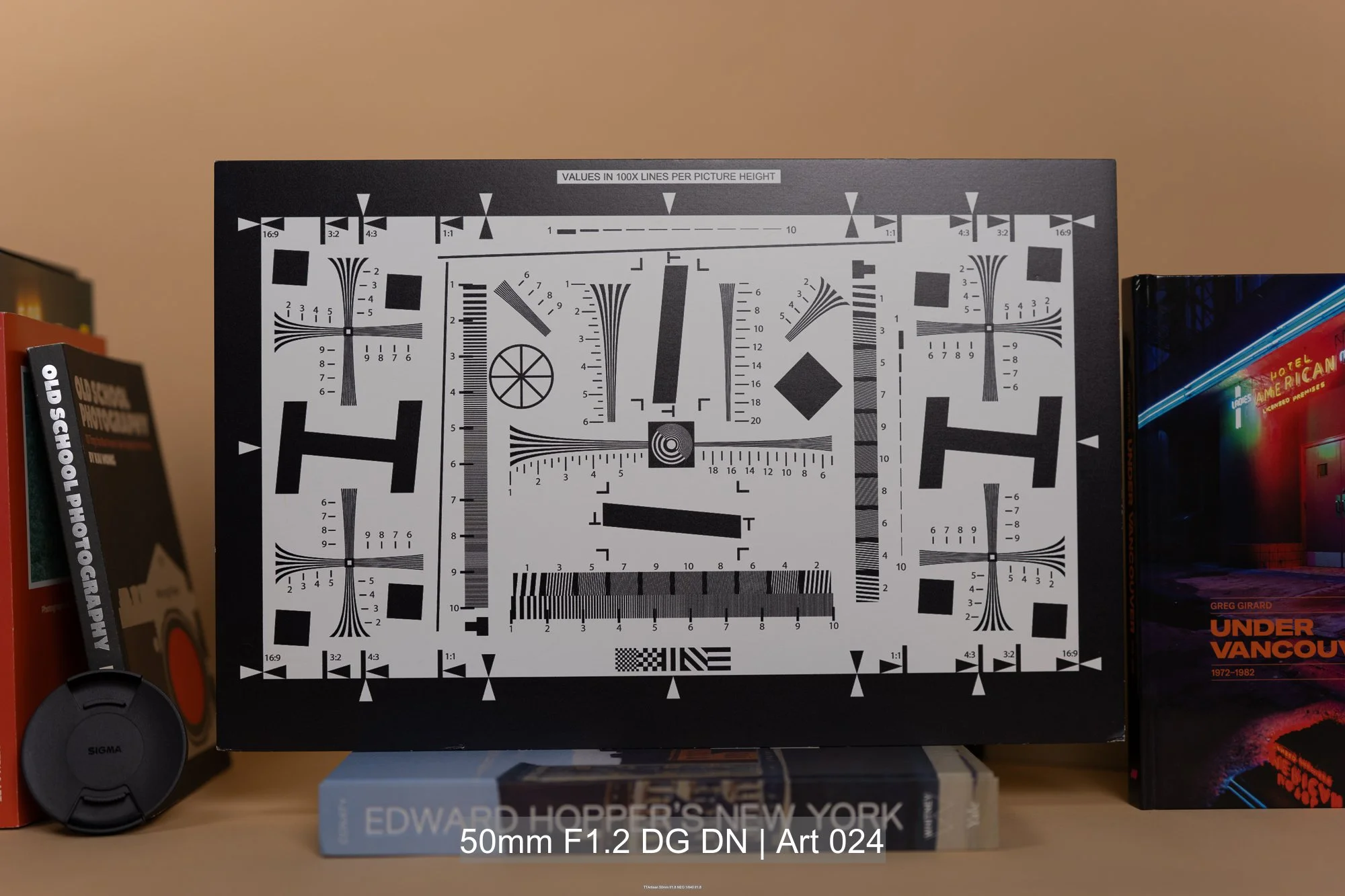
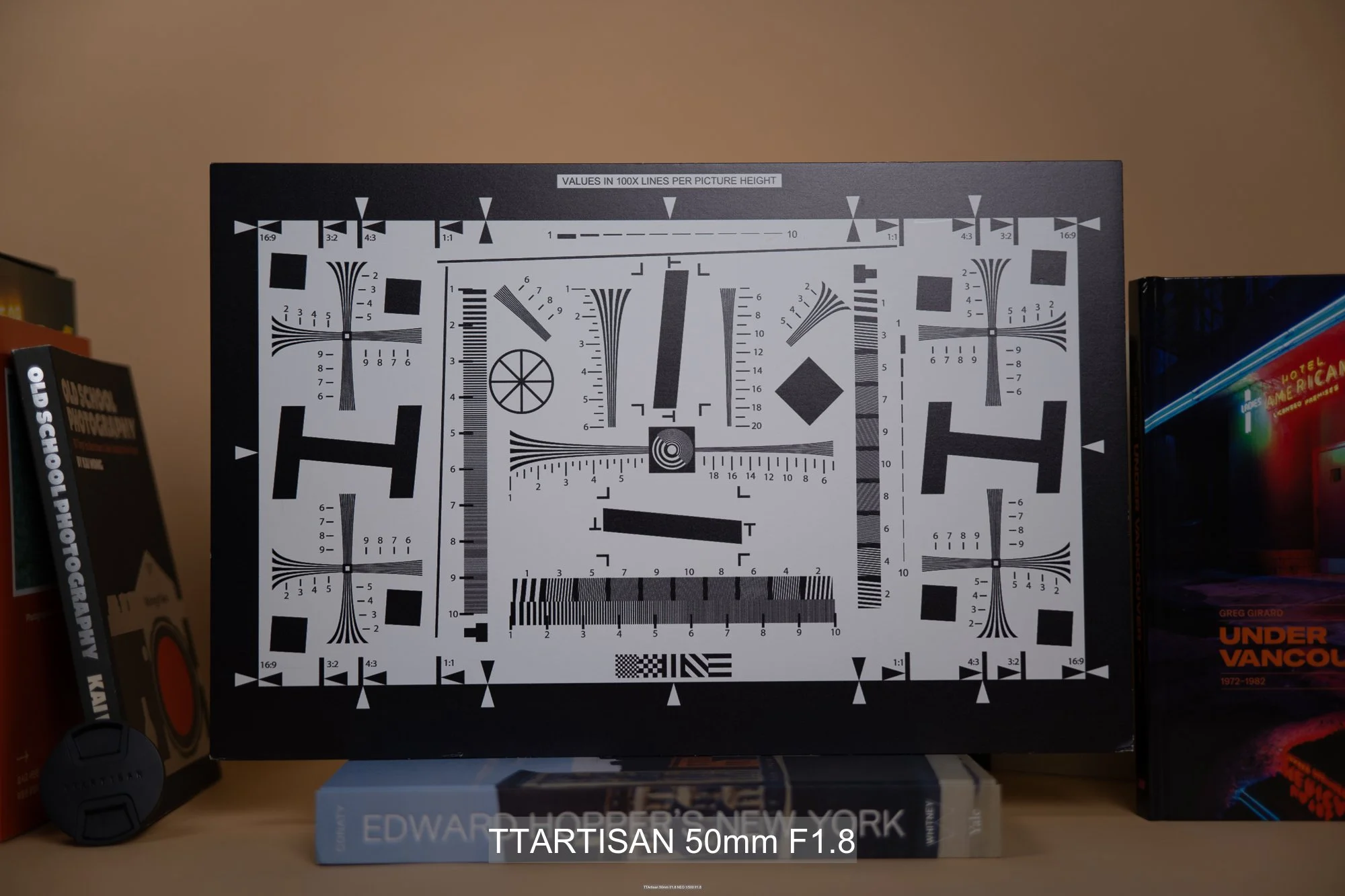
Sony 50 1.4 GM vs Sigma 50 f1.2 Art vs TTArtisan 50 f1.8 @ f/1.8
CENTER
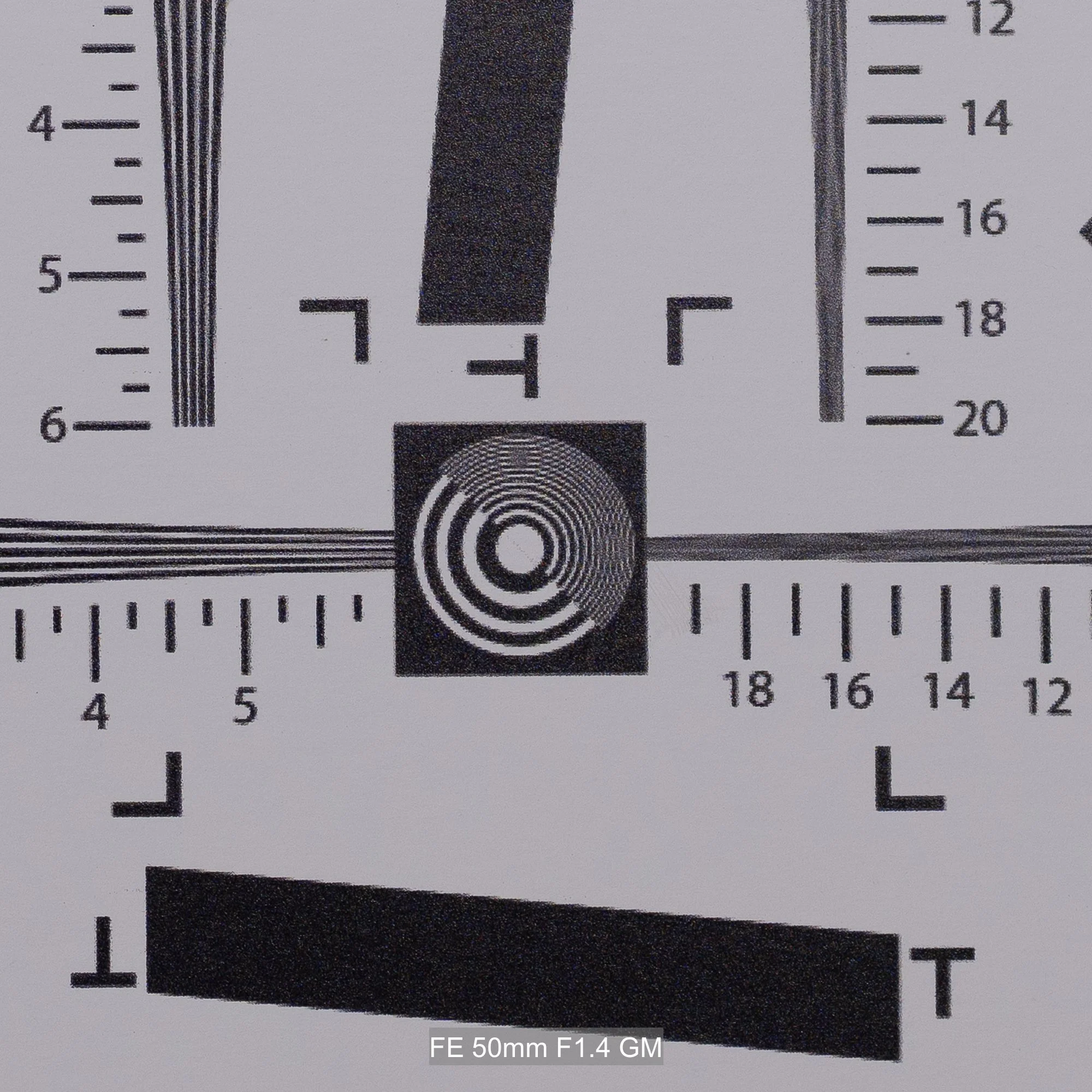
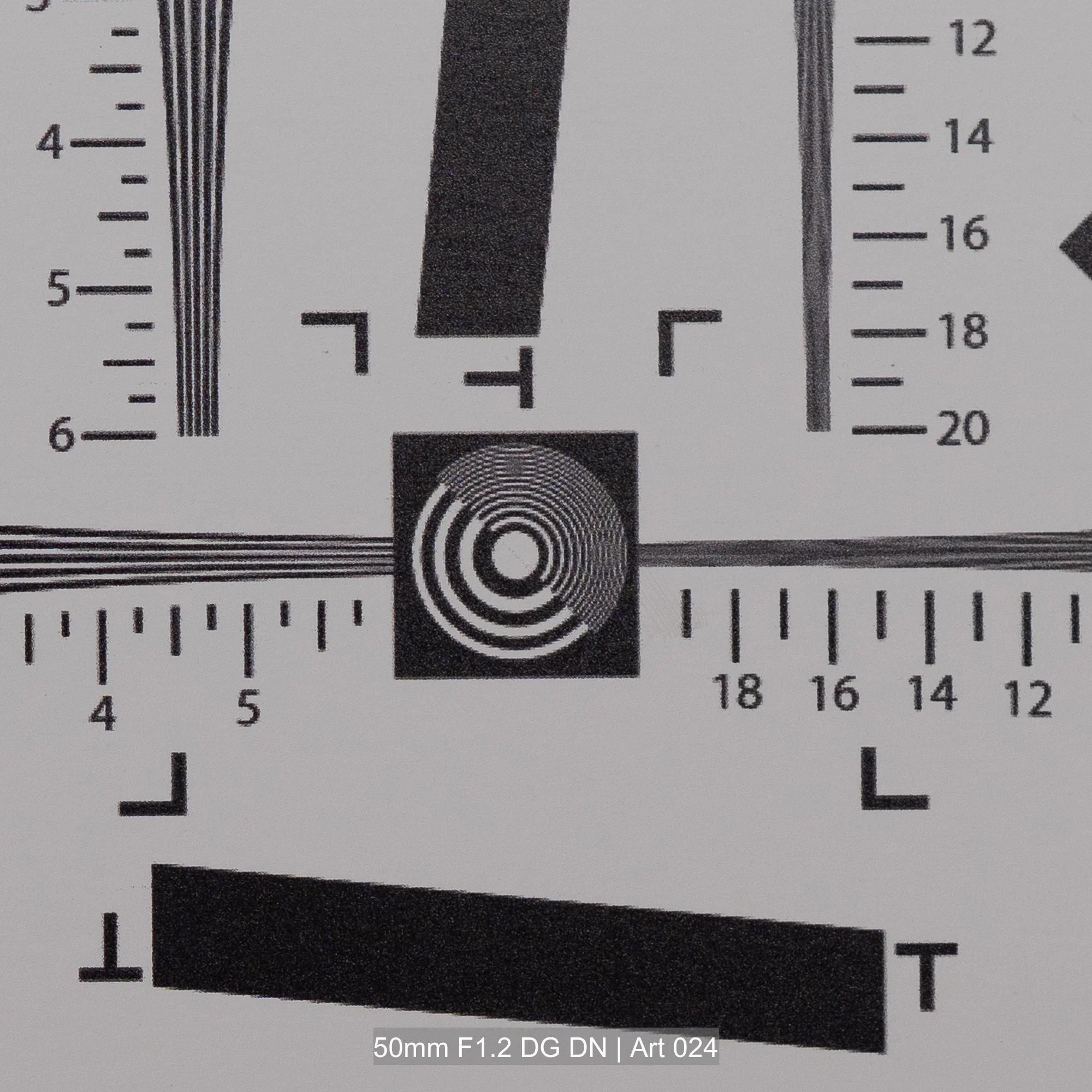
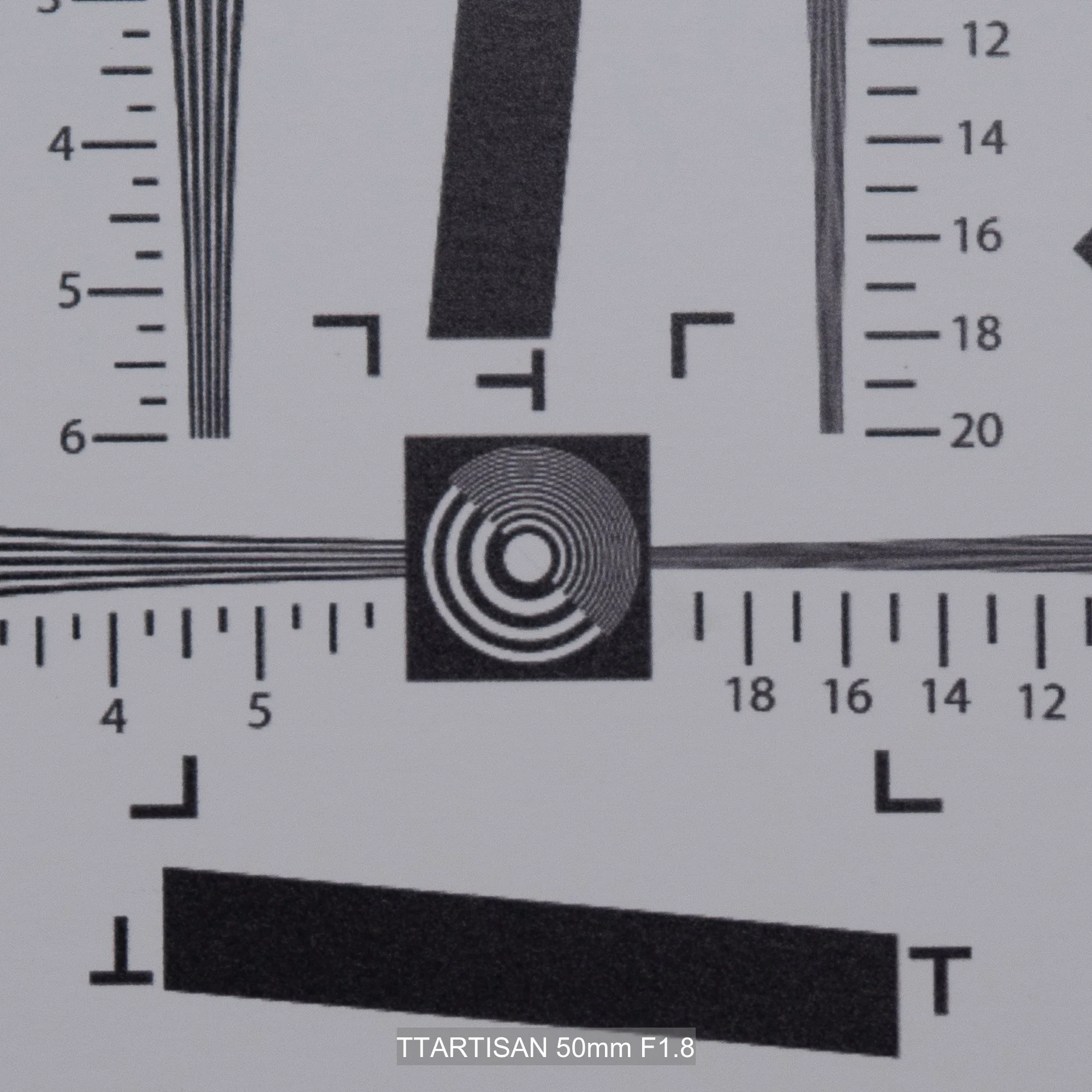
Sony 50 1.4 GM vs Sigma 50 f1.2 Art vs TTArtisan 50 f1.8 @ f/1.8
MID-FRAME
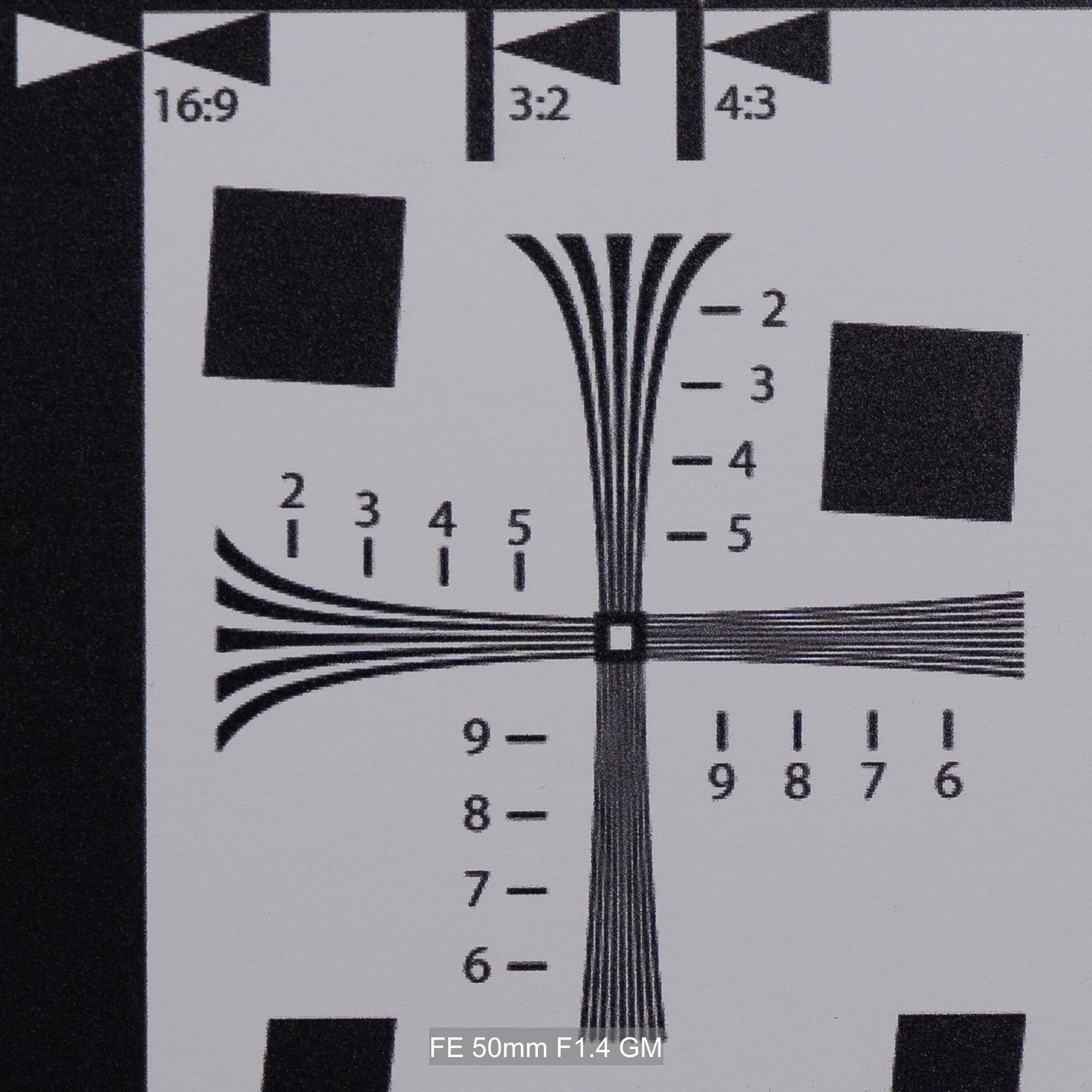
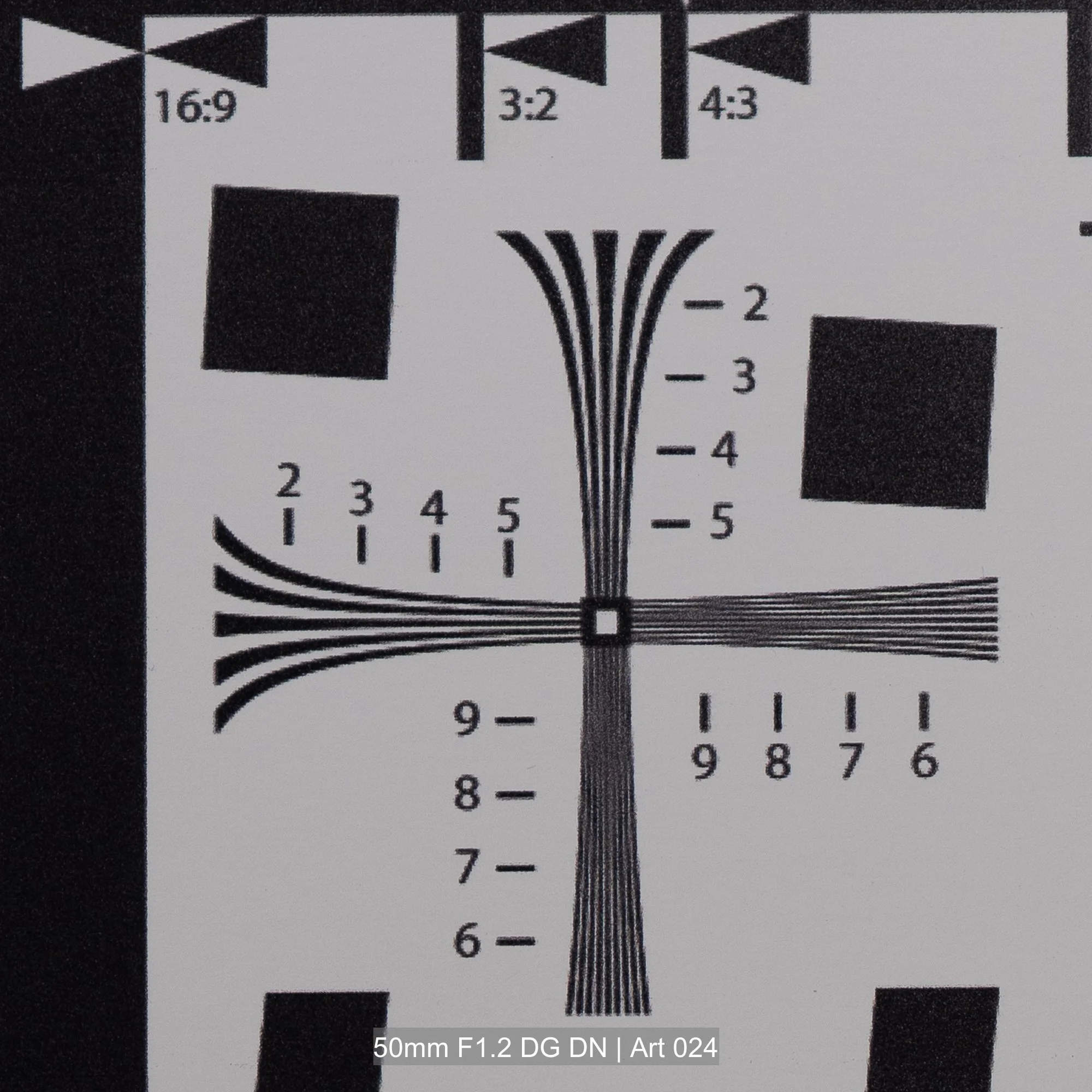
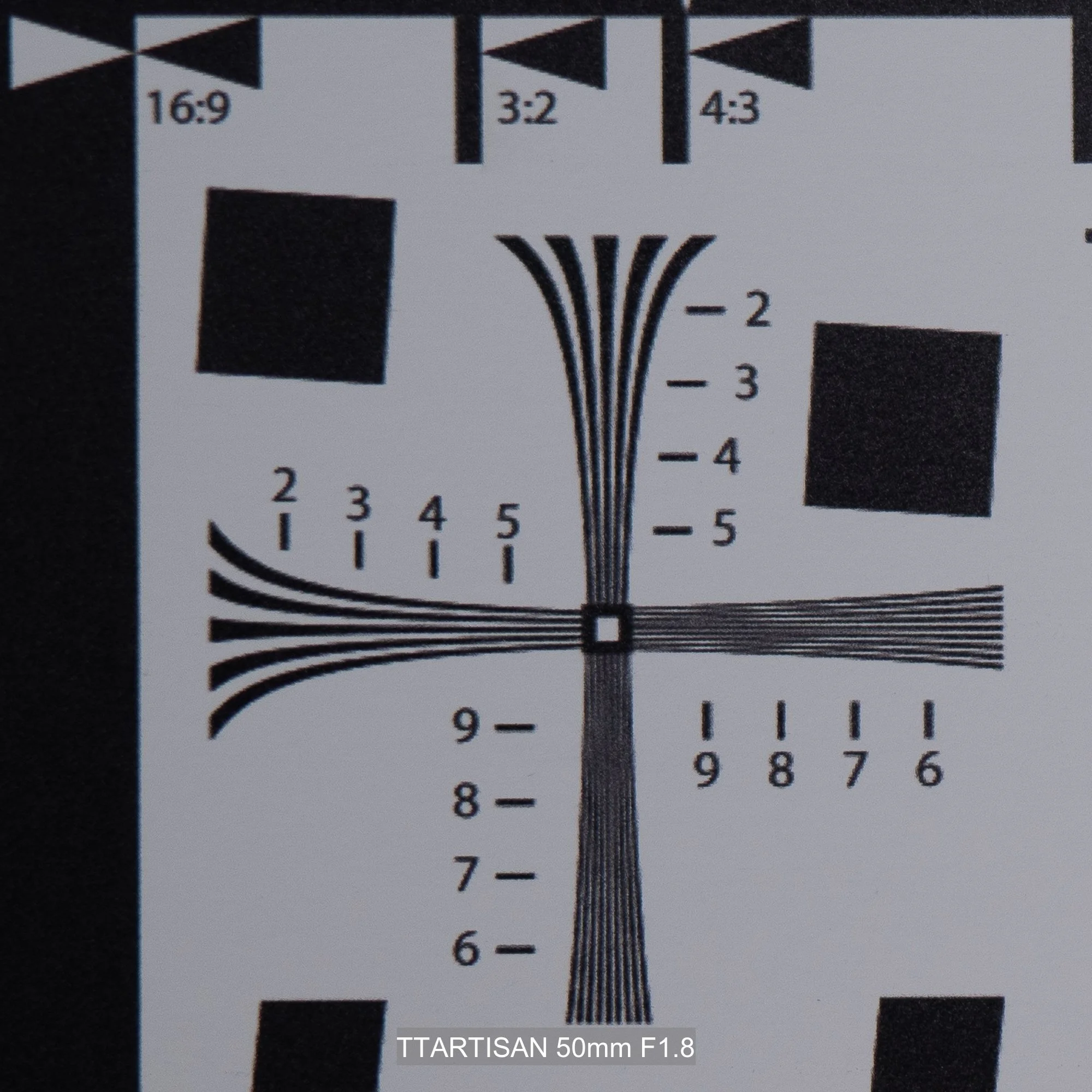
Sony 50 1.4 GM vs Sigma 50 f1.2 Art vs TTArtisan 50 f1.8 @ f/1.8
EDGE
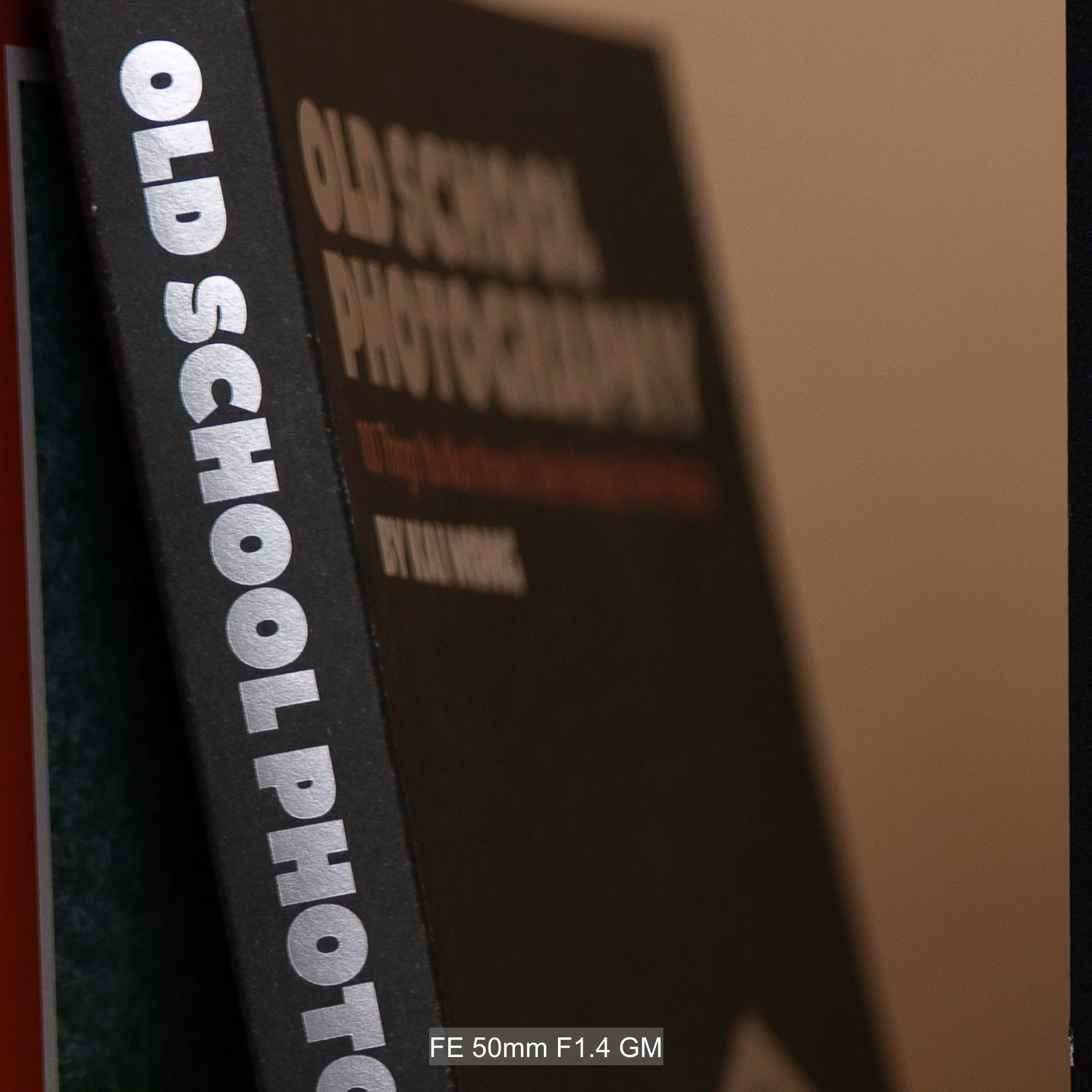
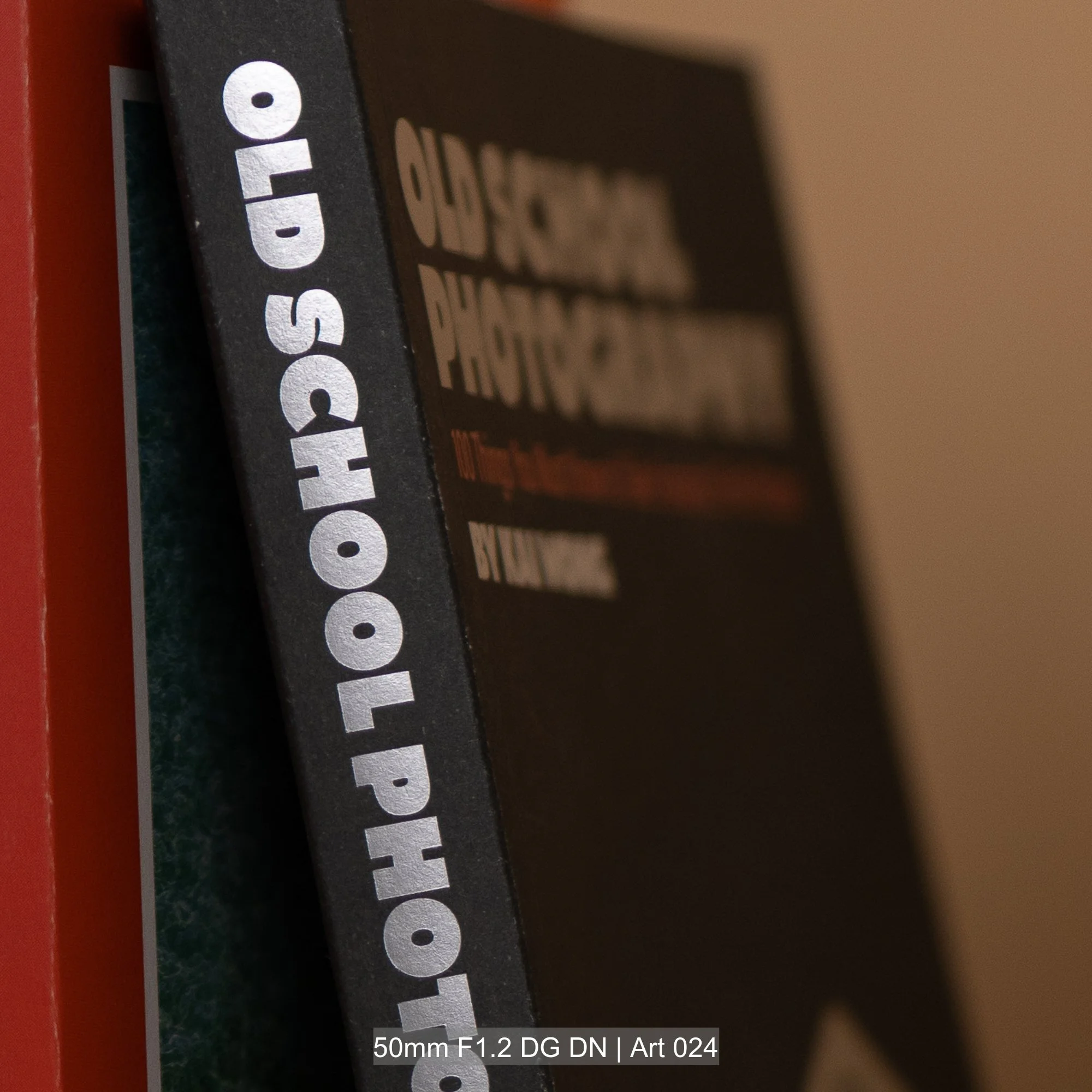
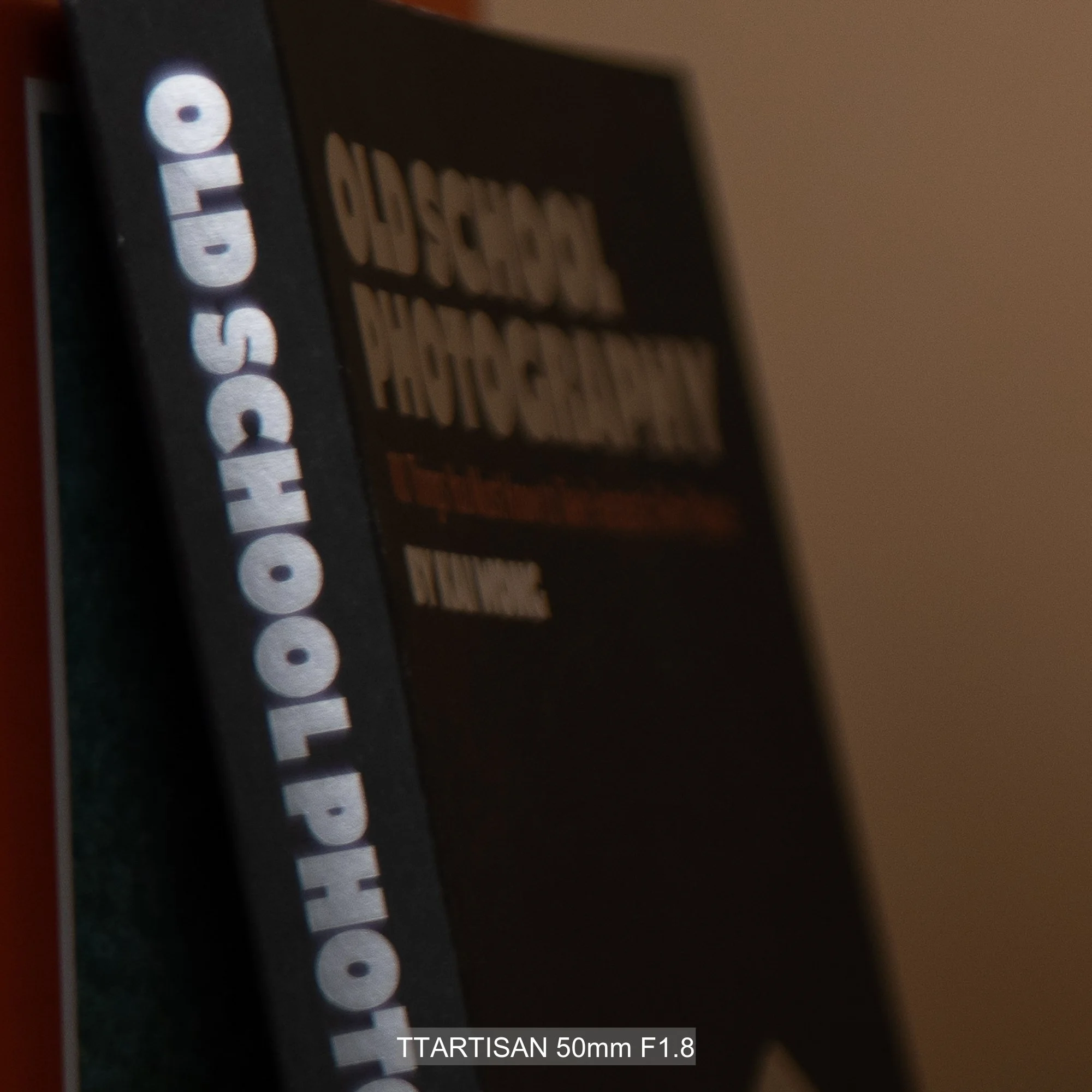
The Sony 50mm f/1.4 GM is the benchmark for a professional-grade 50mm prime. It's extremely sharp across the center, mid-frame, and edges, with almost zero color fringing. The Sigma is also very sharp, though it renders with a warm color cast, and the Sony edges it out for overall clarity. The TTArtisan is noticeably softer than both, and fine lines start to lose definition toward the edges of the frame. The TTArtisan is very good at controlling color-cast and matches much closer to the Sony GM.
The Sony and Sigma are expensive premium lenses, so this was never meant to be a fair fight. The test is a useful way to see the full range of image clarity between a sub-$100 lens, the Sony GM at $1,398, and the Sigma Art at $1,539.
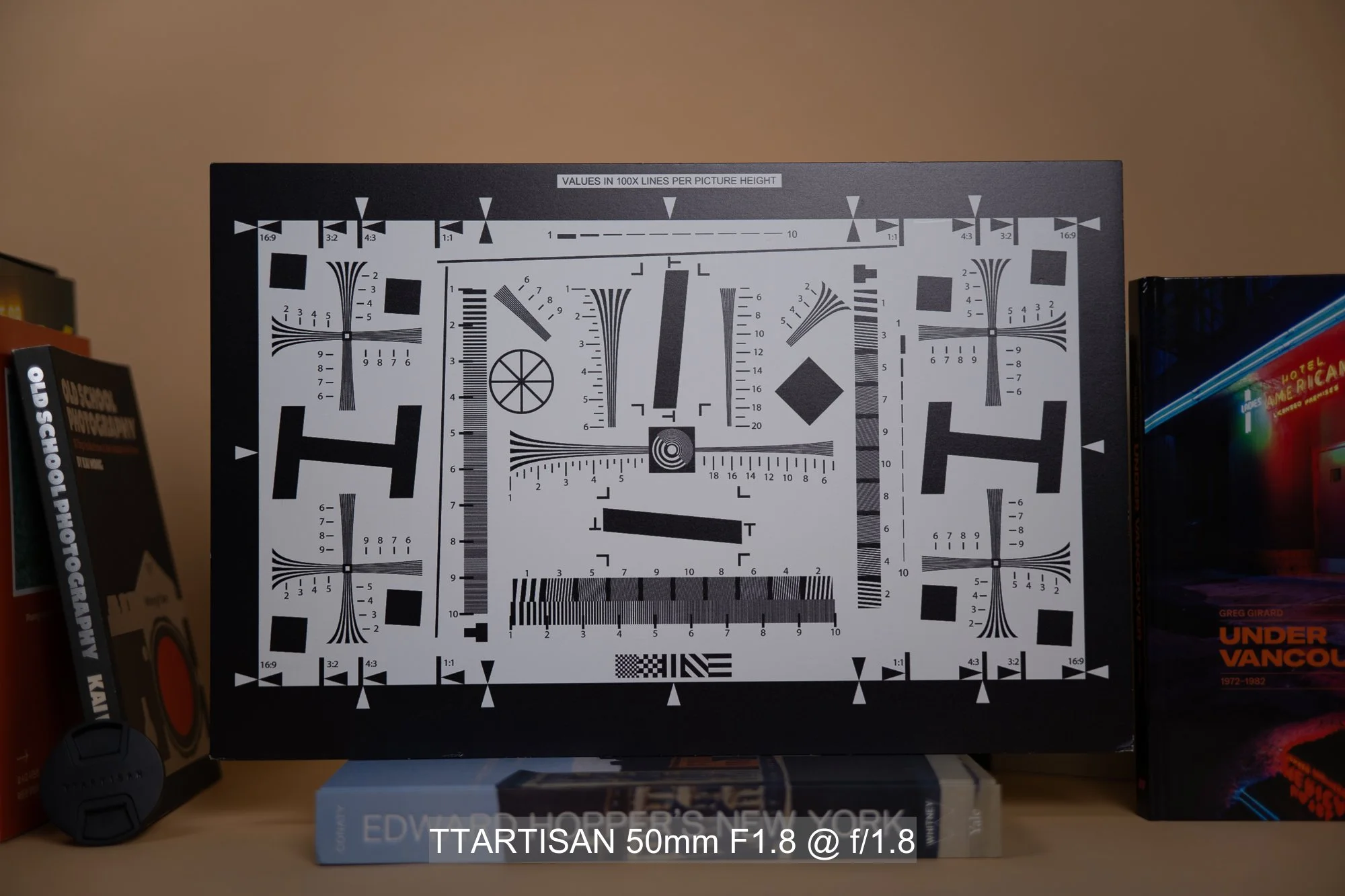
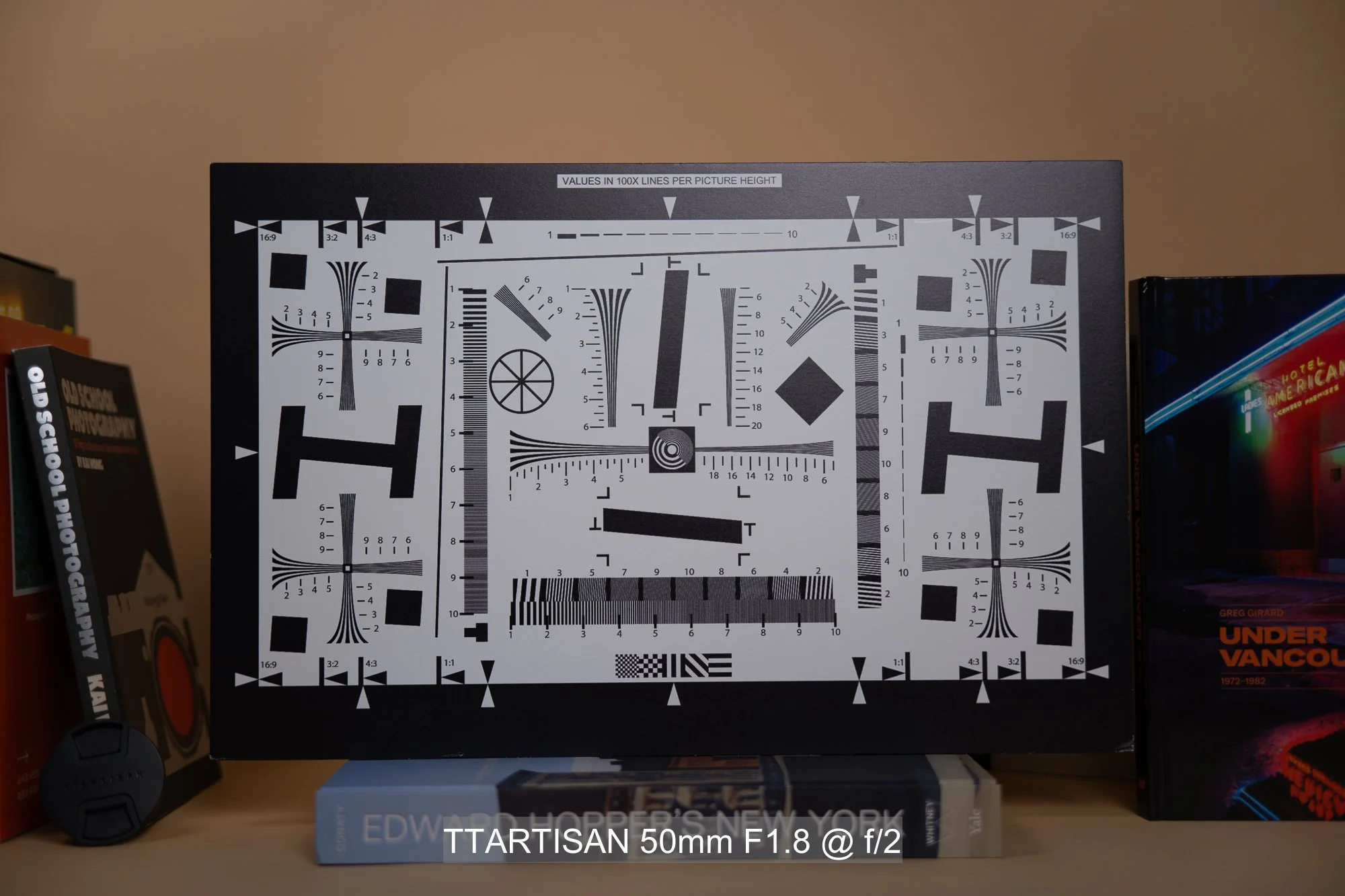
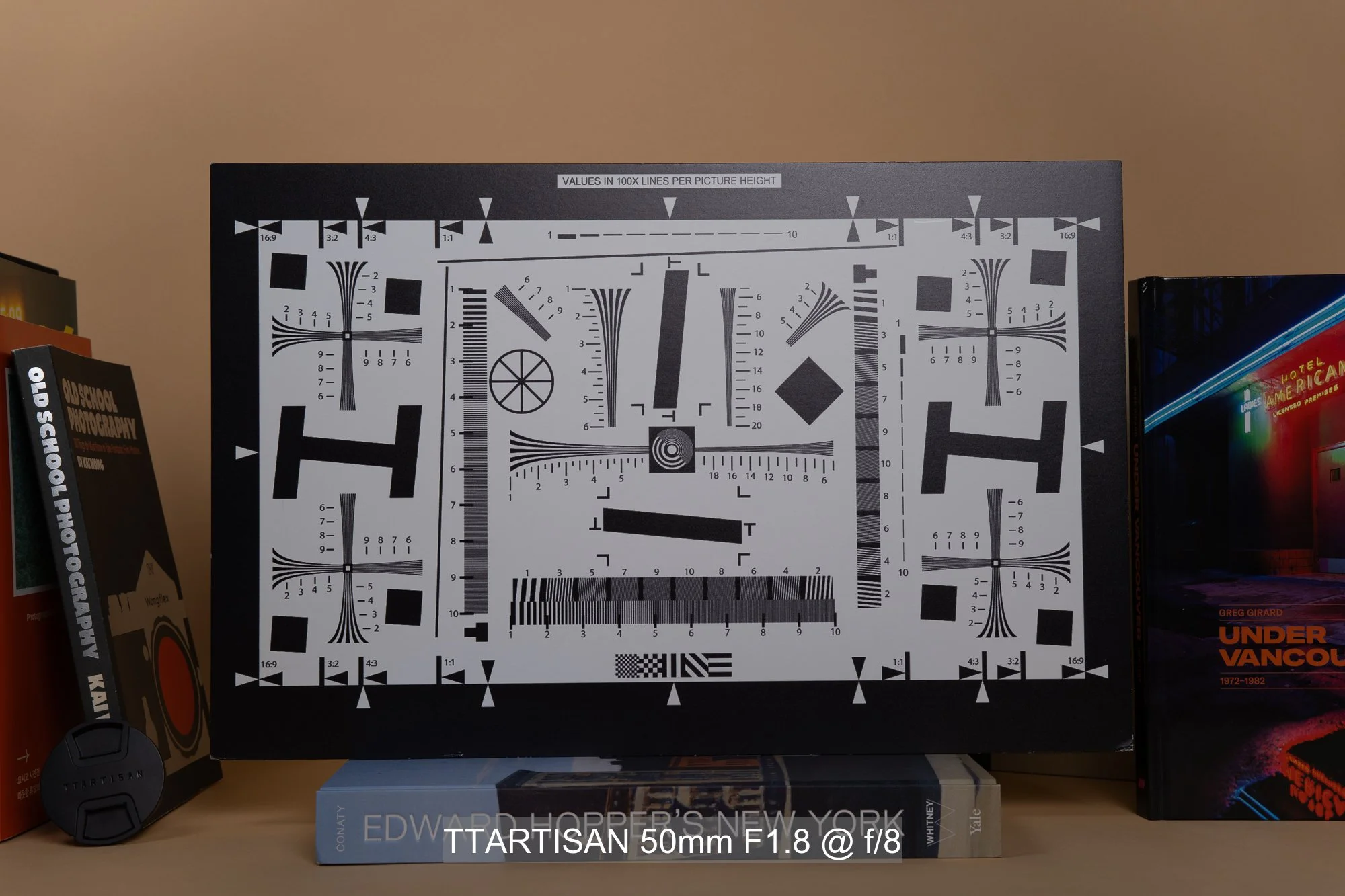
In the series of test charts below, you’ll see the TTArtisan begins to control the image sharpness and vignetting by f/4.0 and f/5.6.
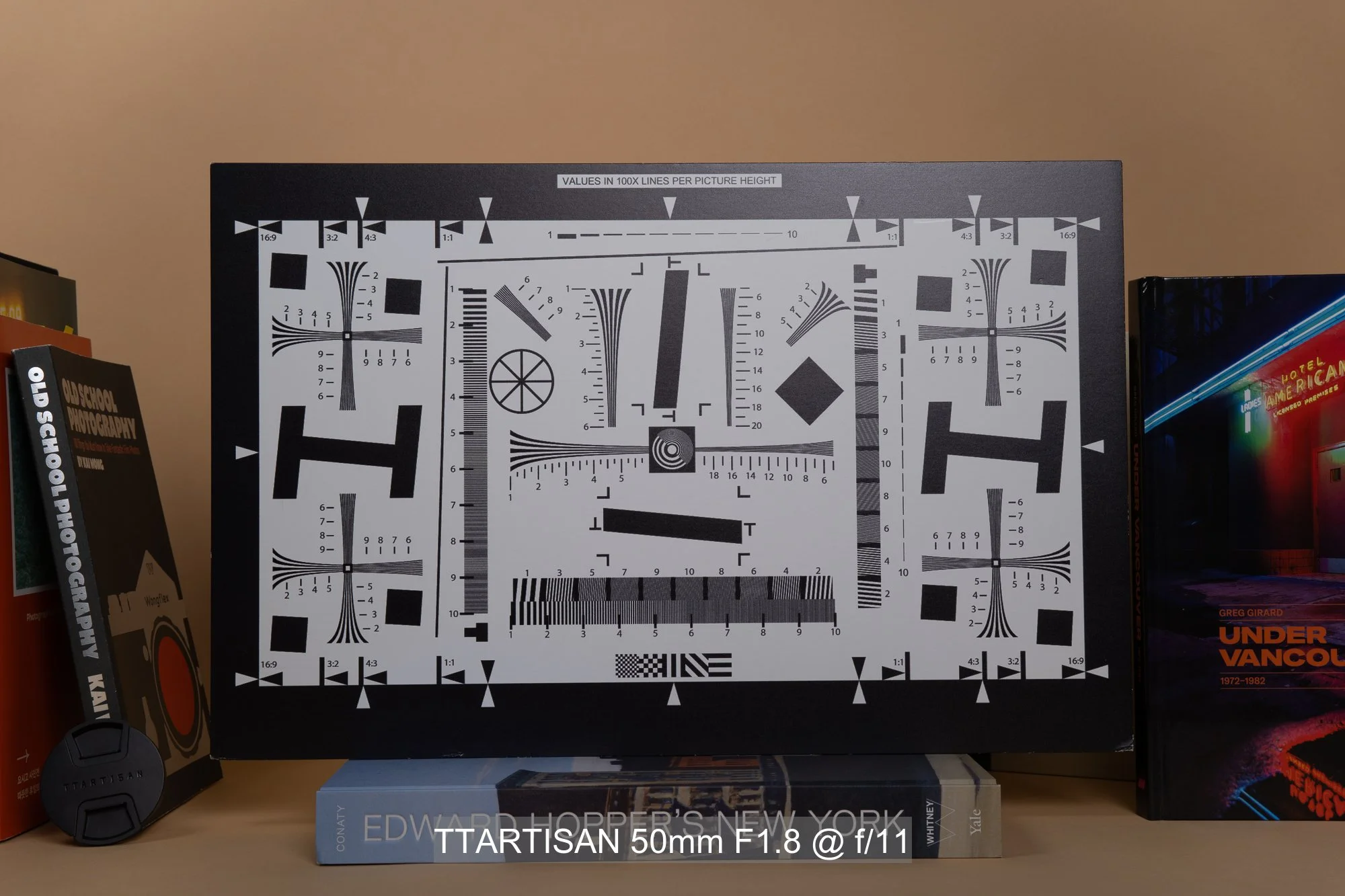
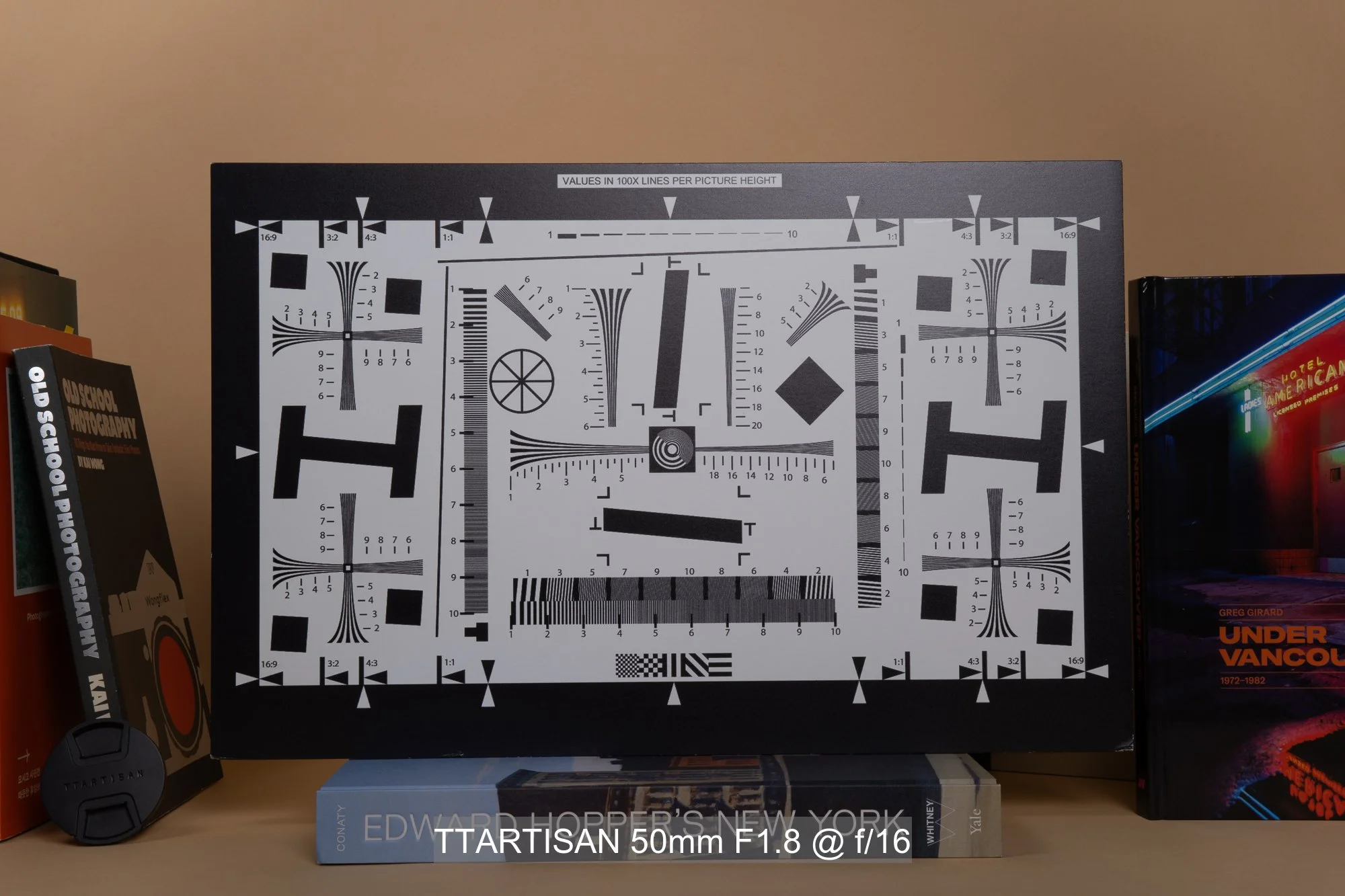
Bokeh:
The TTArtisan renders a surprisingly smooth background blur. Its f/1.8 aperture separates subjects cleanly from the background, and I was genuinely impressed by how well an $89 lens handles shallow depth of field. With seven aperture blades, bokeh balls stay fairly round wide open and take on a slightly polygonal shape as you stop down, while still producing pleasing out-of-focus highlights. There is a slight cats-eye effect at the edges of the frame, but it’s very minor.
Sony 50 1.4 GM vs Sigma 50 f1.2 Art vs TTArtisan 50 f1.8 @ f/1.8
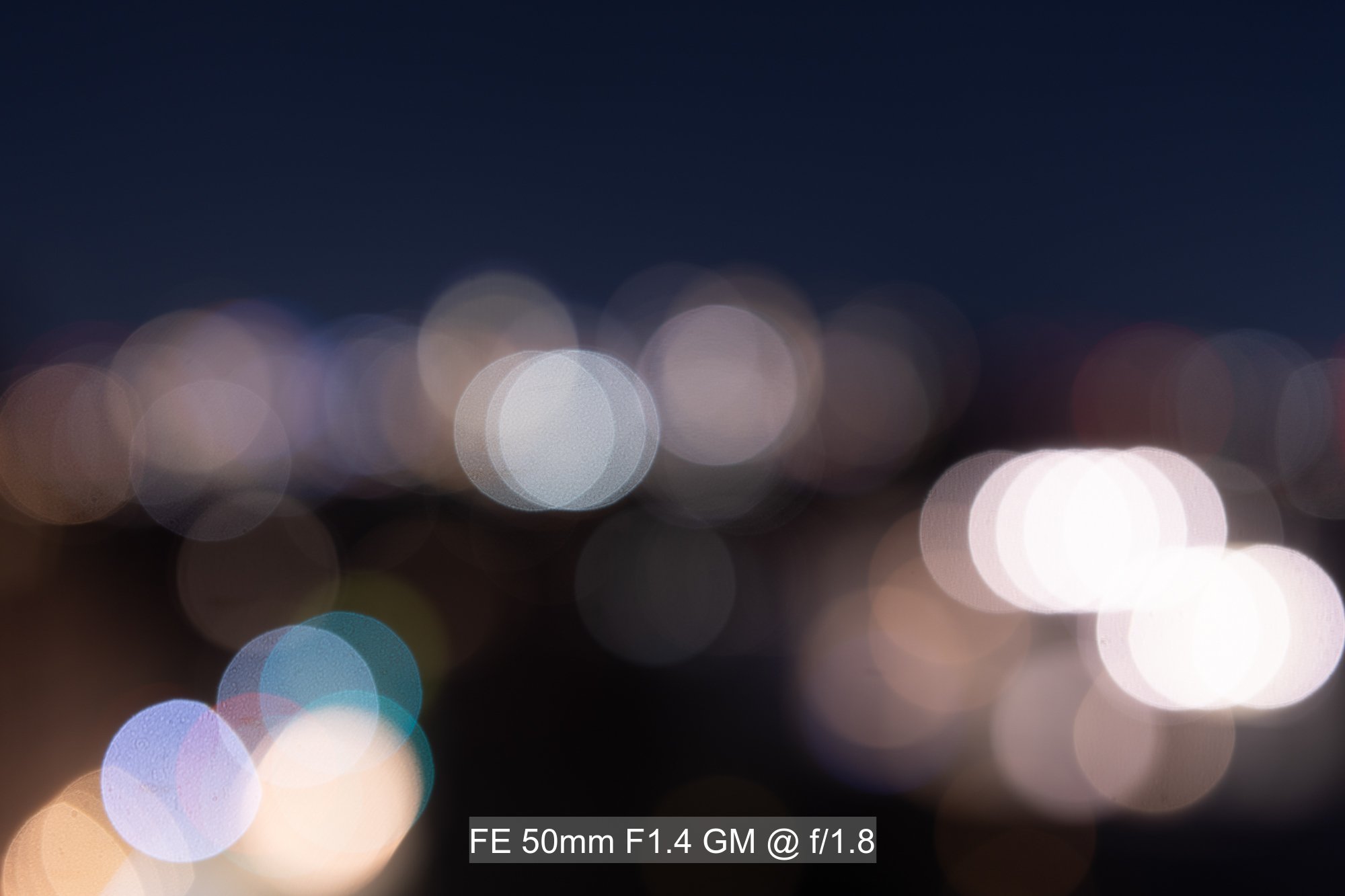
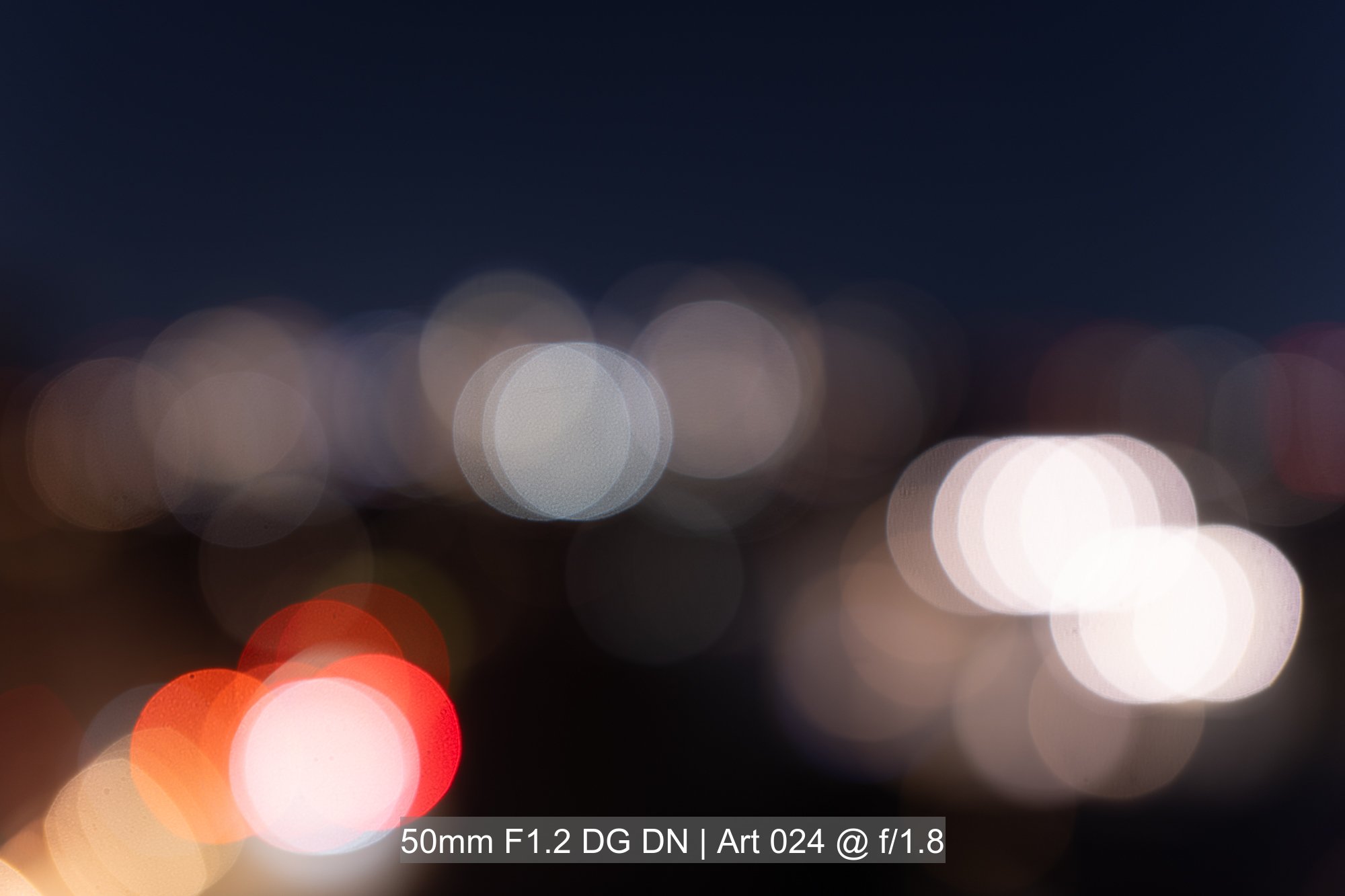
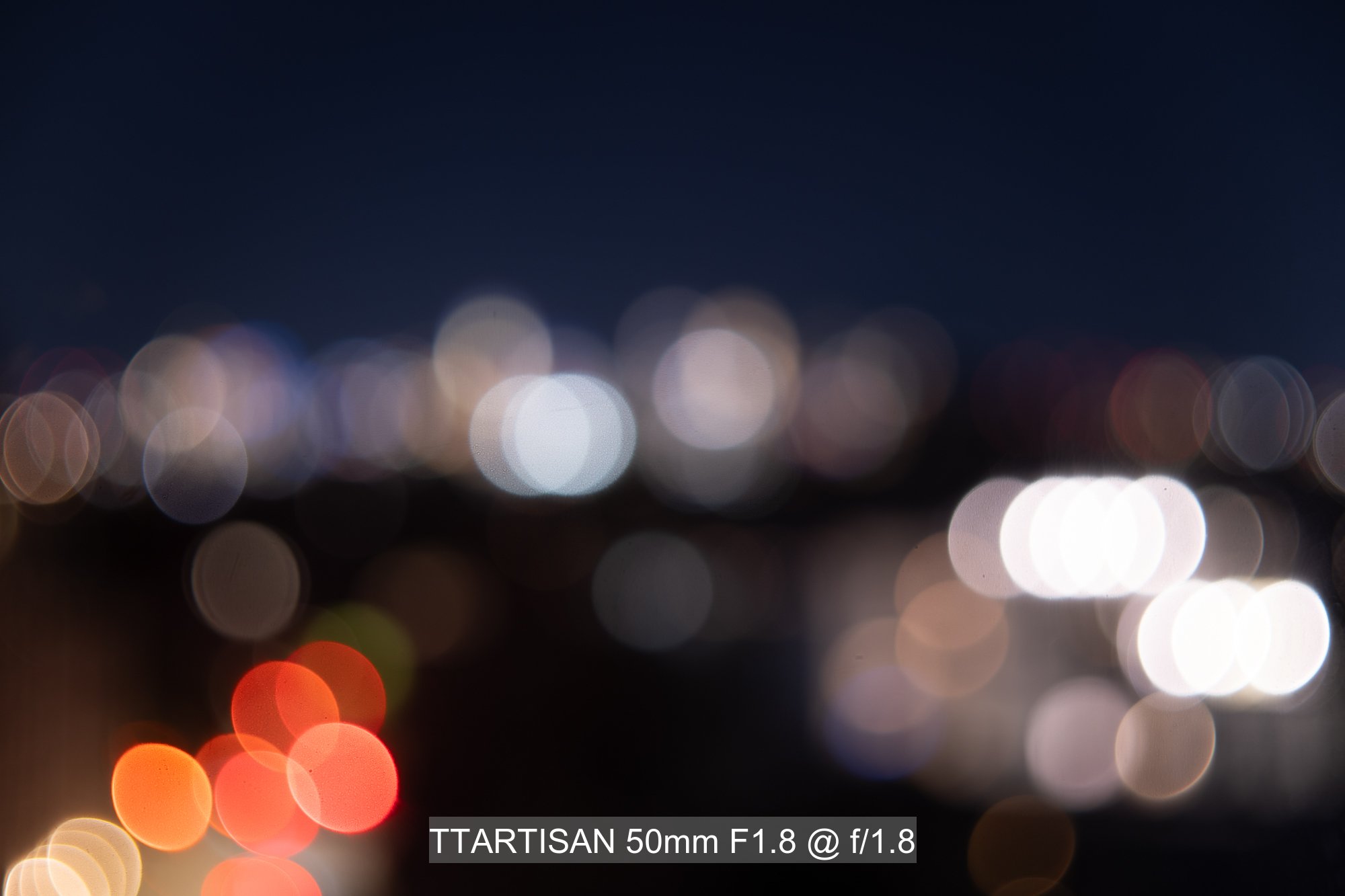
Next to its premium siblings from Sony and Sigma, the TTArtisan's out-of-focus areas look less refined, which is expected given the price gap. Even so, I'd still rate its bokeh balls as very good.
Flaring:
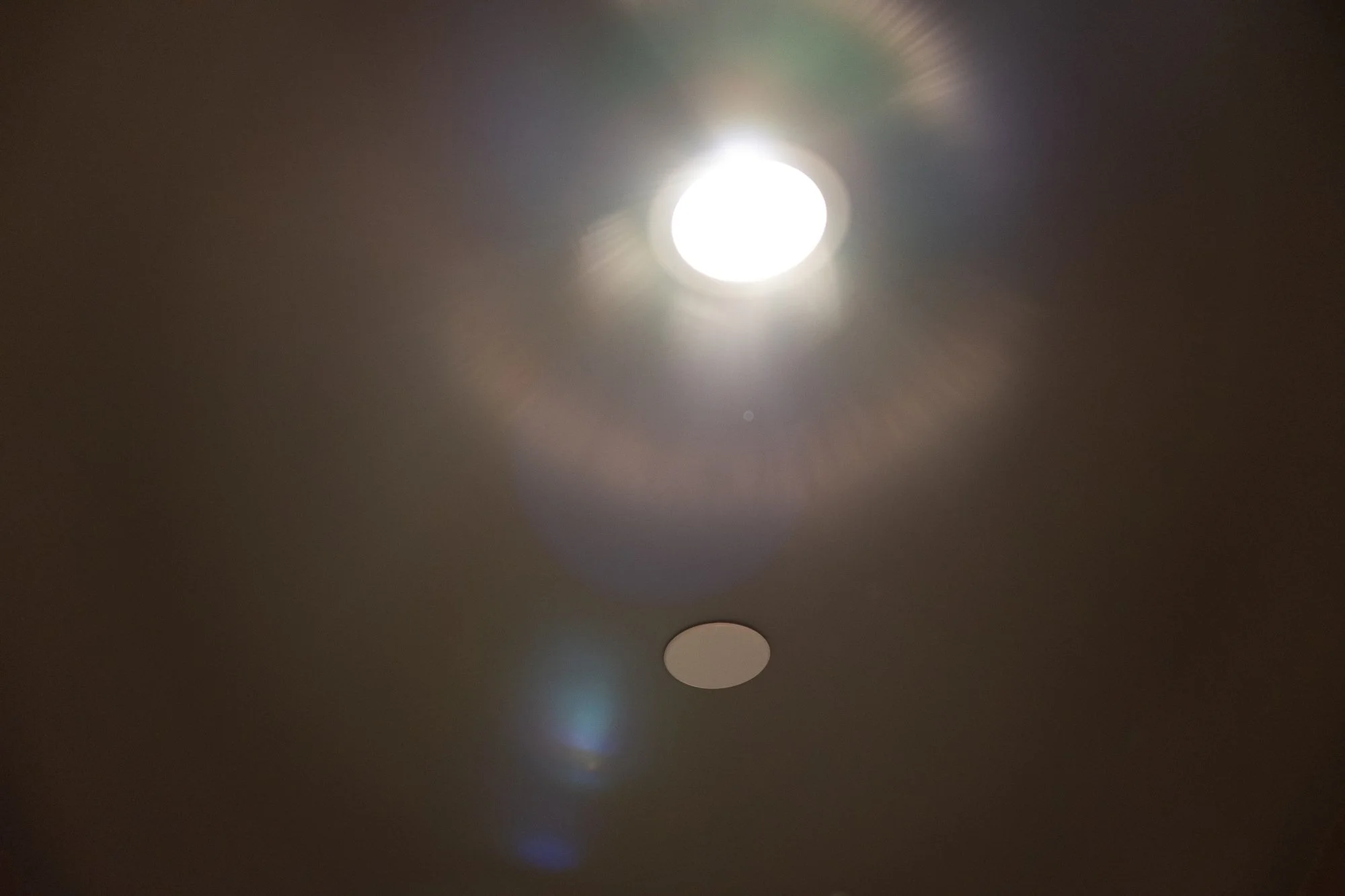
As with most budget third-party lenses, flaring is pronounced when the lens faces a strong light source. This is the category where premium lenses earn their price, thanks to their advanced optical coatings. In everyday shooting, I rarely encountered lens flares. It only became obvious when I pointed the lens directly at a light source, which produced clear flares and halos.
The subtler issue shows up in bright scenes, as I mentioned earlier. When shooting toward white objects or a bright sky, the coatings struggle to control the stray light, and highlights take on a glowing halo that can make those areas look blown out.
Sample Images
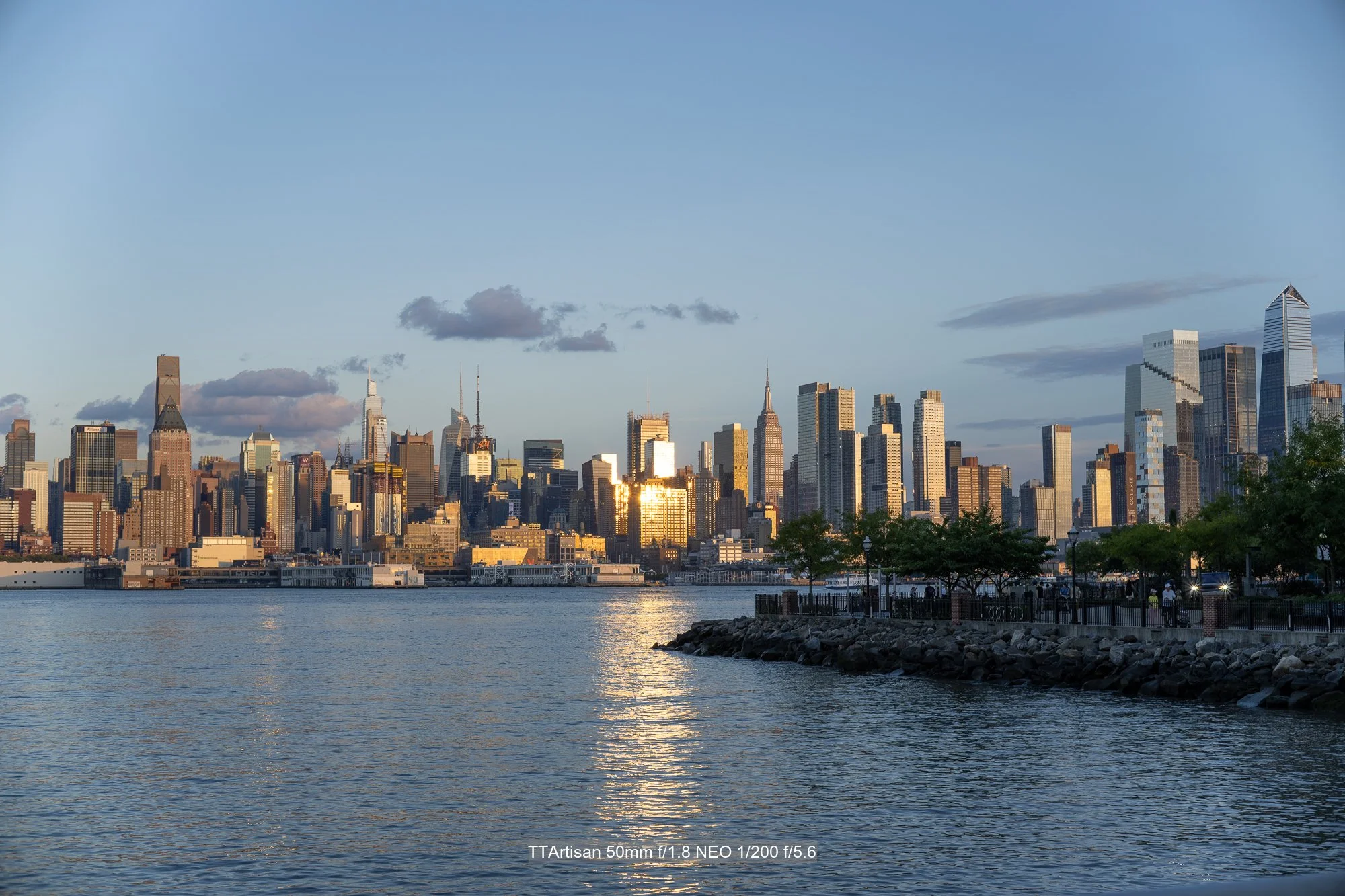
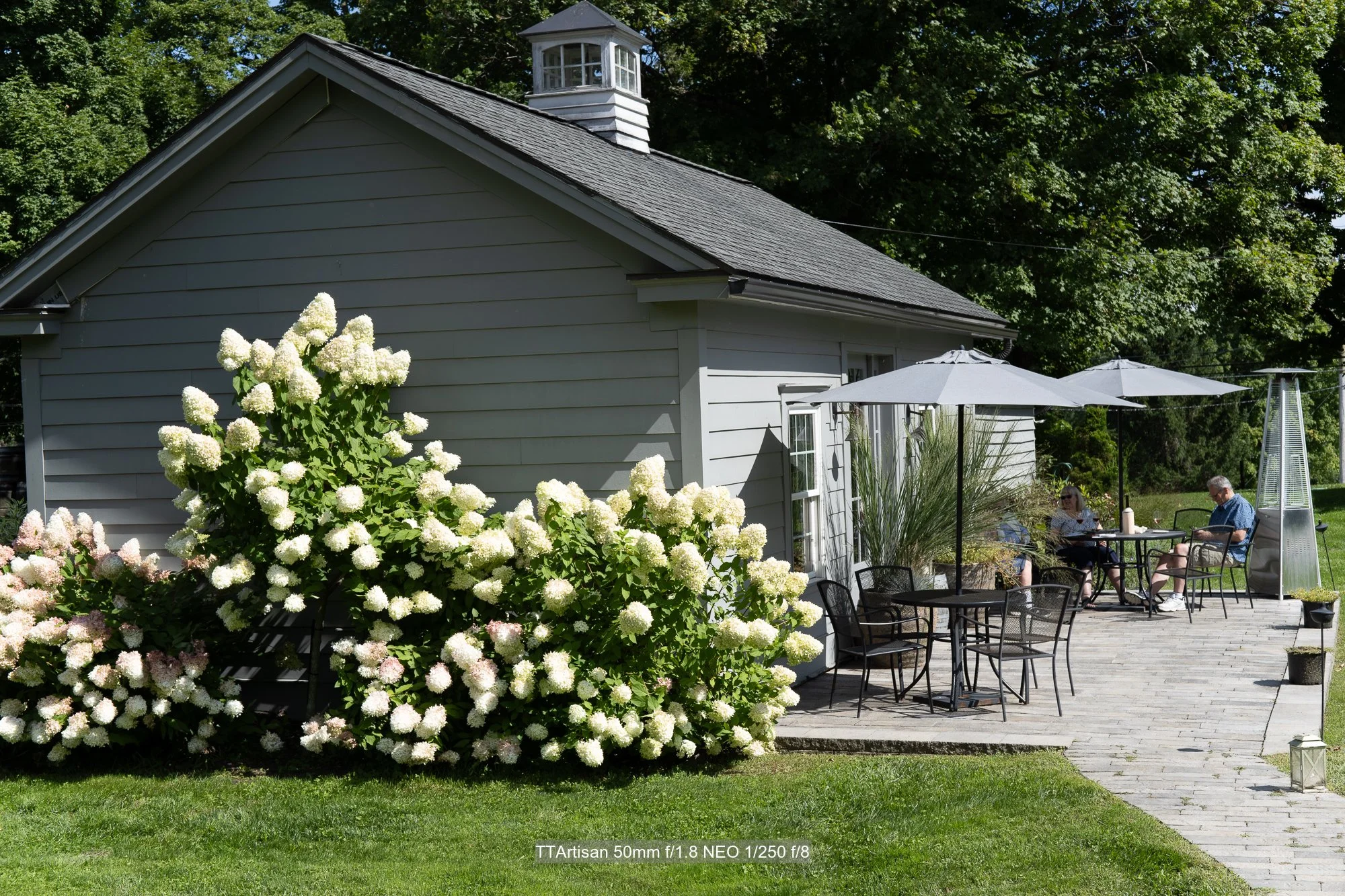
Click on the photo to view a larger image.


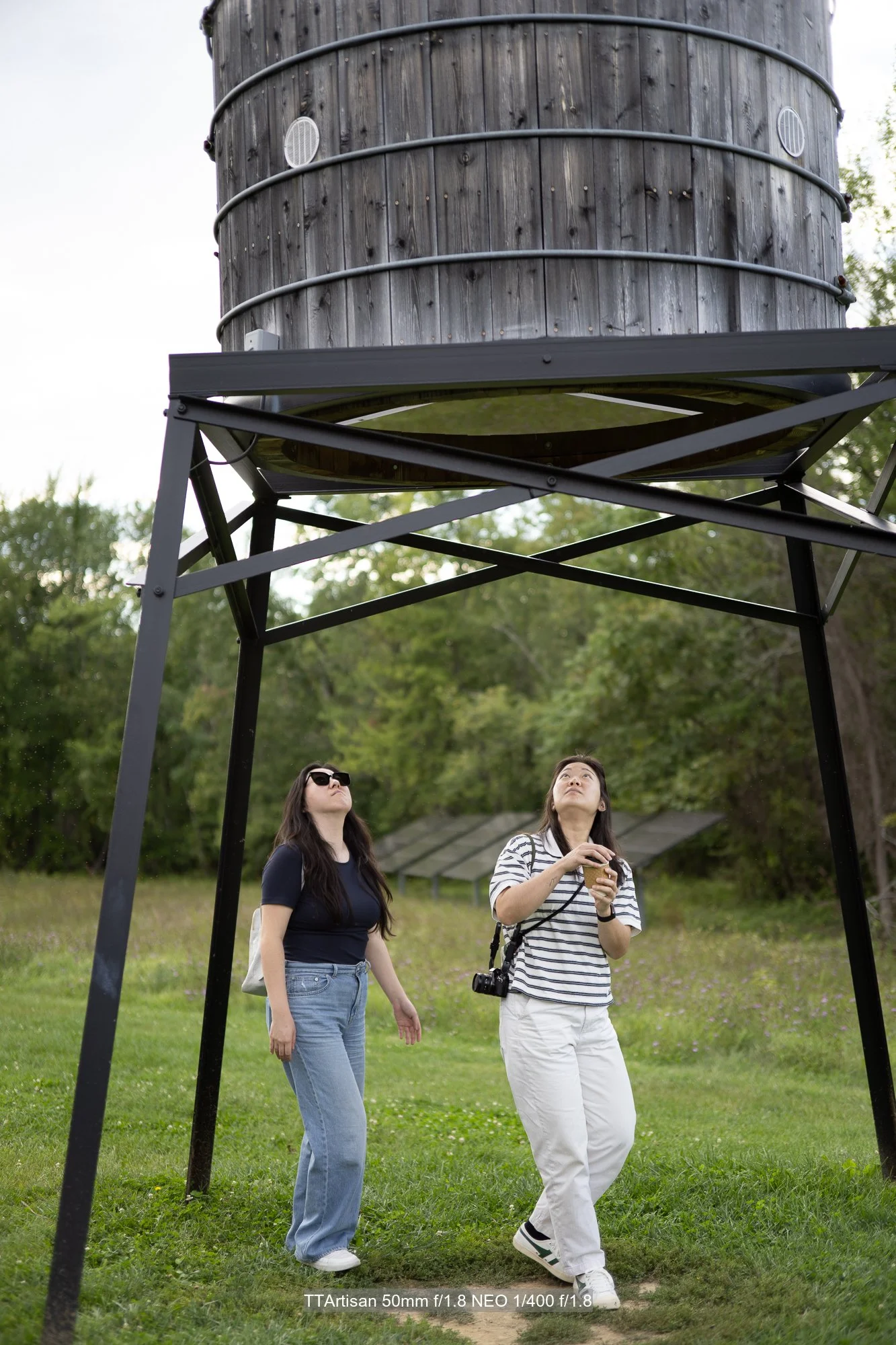

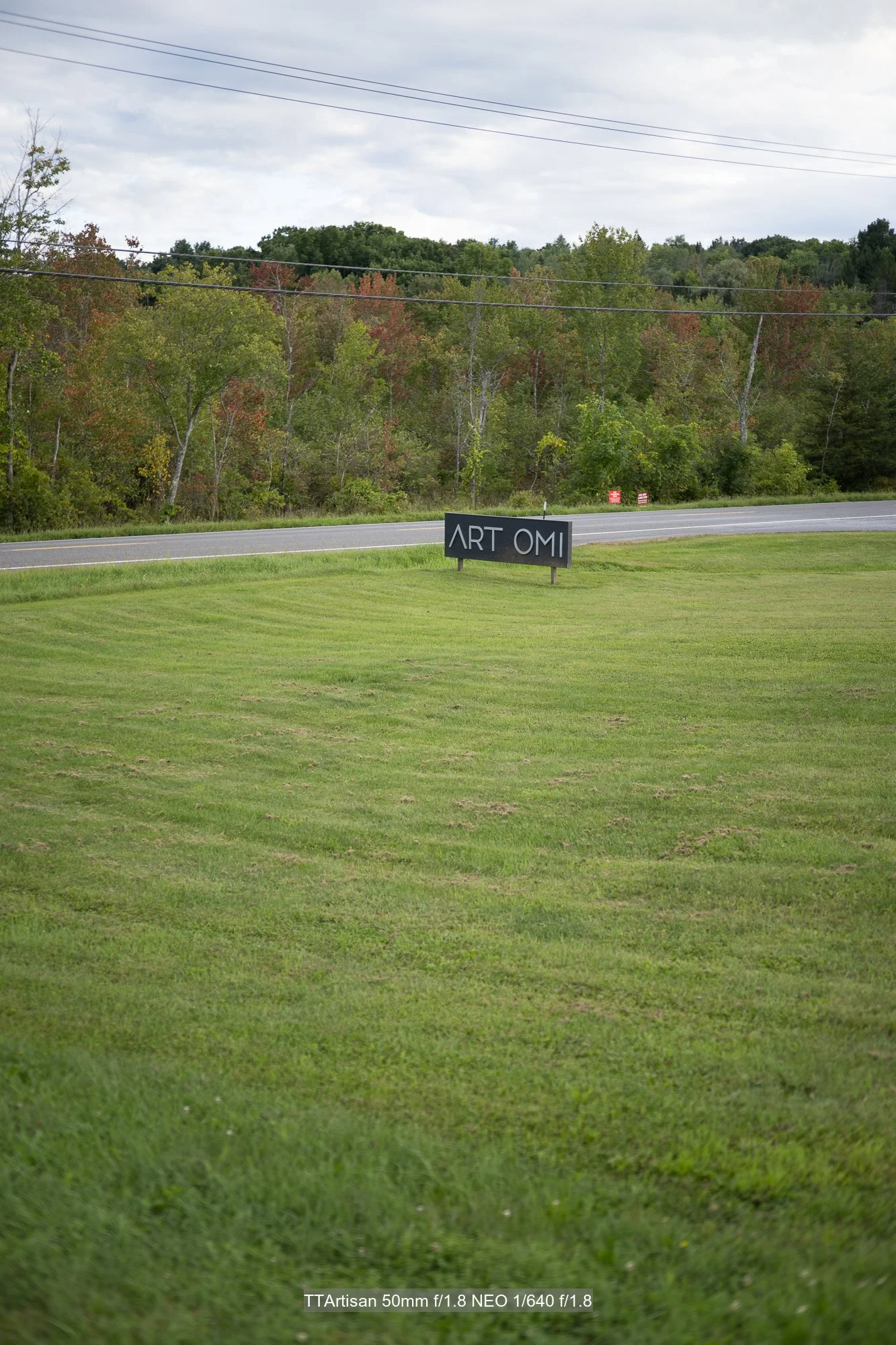






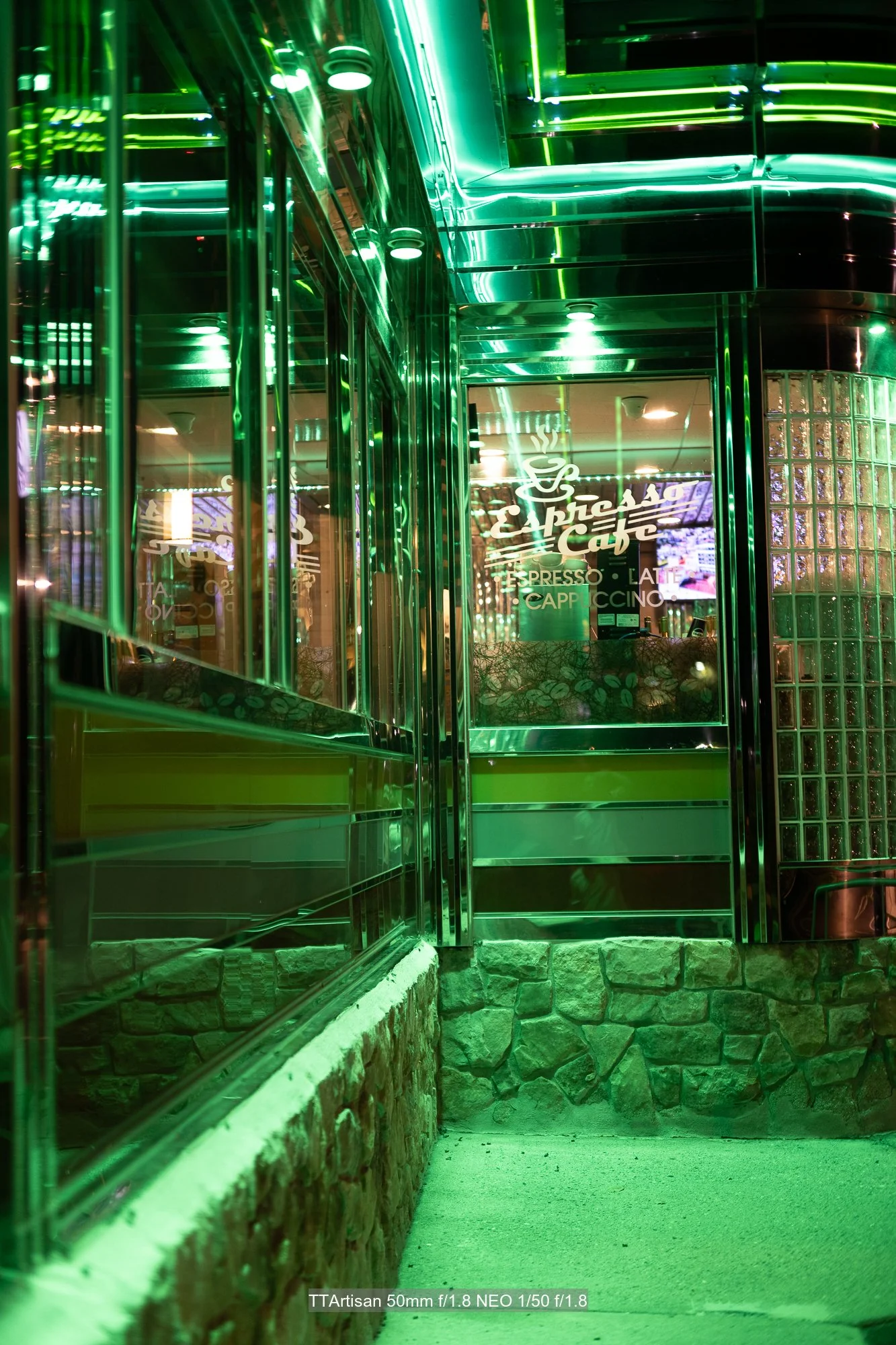
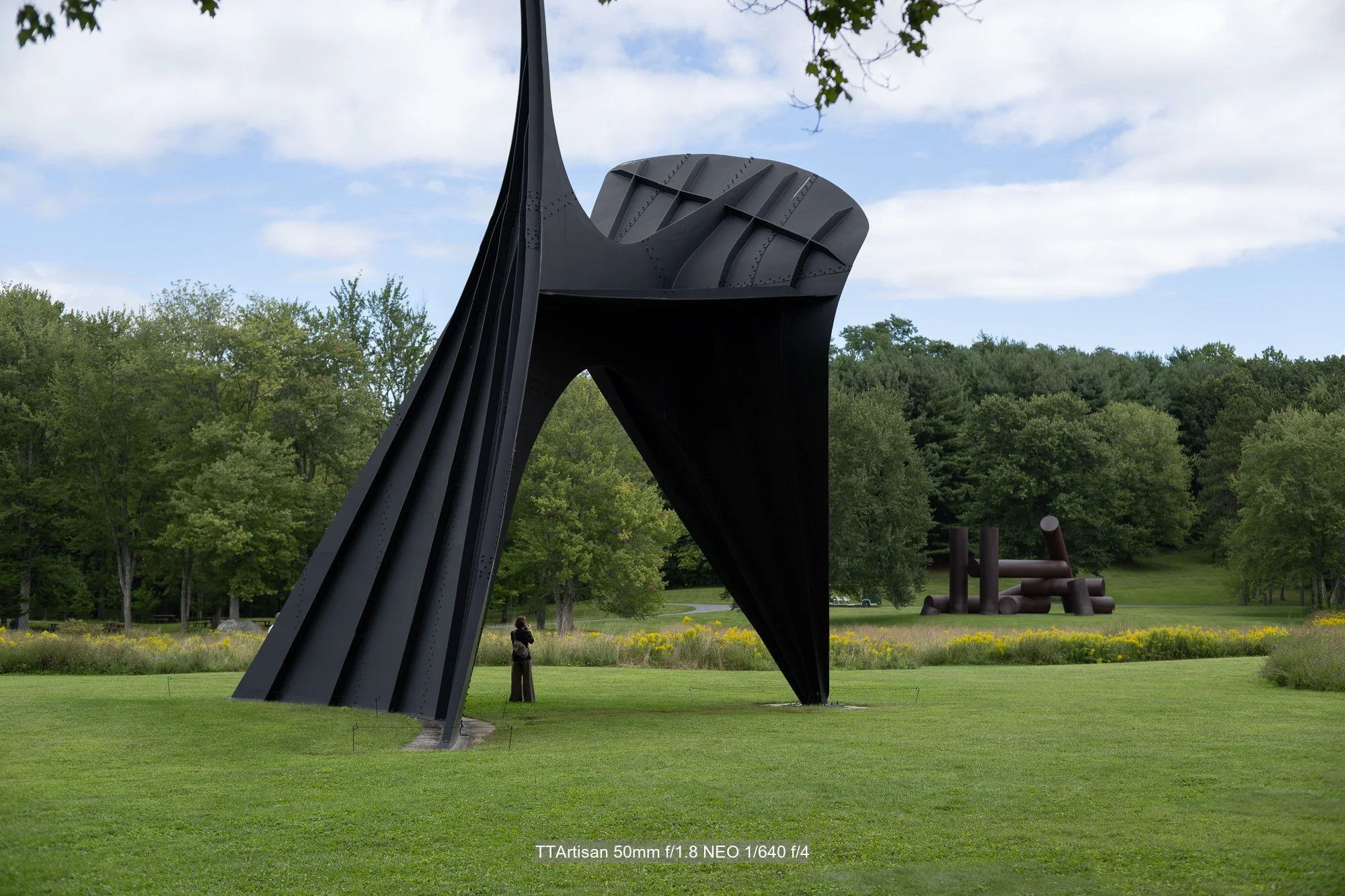


Final Thoughts
Overall, I had a lot of fun shooting with a budget lens again. I kept thinking about how this would have been a dream lens for my younger self, back when every dollar counted. For paid professional work, I'd reach for something more robust, but this lens is a great fit for amateurs and casual photographers.
If you’re someone who just picked up their first full-frame camera and are looking for an affordable 50mm prime lens to get started with, I’d highly recommend trying out the TTArtisan 50mm f/1.8 Neo!
Pros:
Cheapest 50mm autofocus lens
Acceptable autofocus
Wide aperture at f/1.8 for portraits
Lightweight and travel-friendly design
Pleasing background bokeh
Color rendition is accurate
Cons:
Noticeable softness and chromatic aberration until f/4.0
No weather sealing
Tiny lens hood
No manual focus ring
Loose rear cap with USB-C Port
Slow focus transitions for video
Rating: 3.5/5

Review: TTArtisan 35mm f/1.4 for Sony E
A definitive review of the TTArtisan 35mm f/1.4 for Sony E-Mount.
Intro
I generally avoid recommending lenses for the Sony E mount system that fall on the cheaper side. Typically they have shoddy build quality and glaringly bad image performance. Come to my surprise when I got my hands on the TTArtisan 35mm f/1.4 for Sony E lens, it was quite usable at only $73.00 USD!
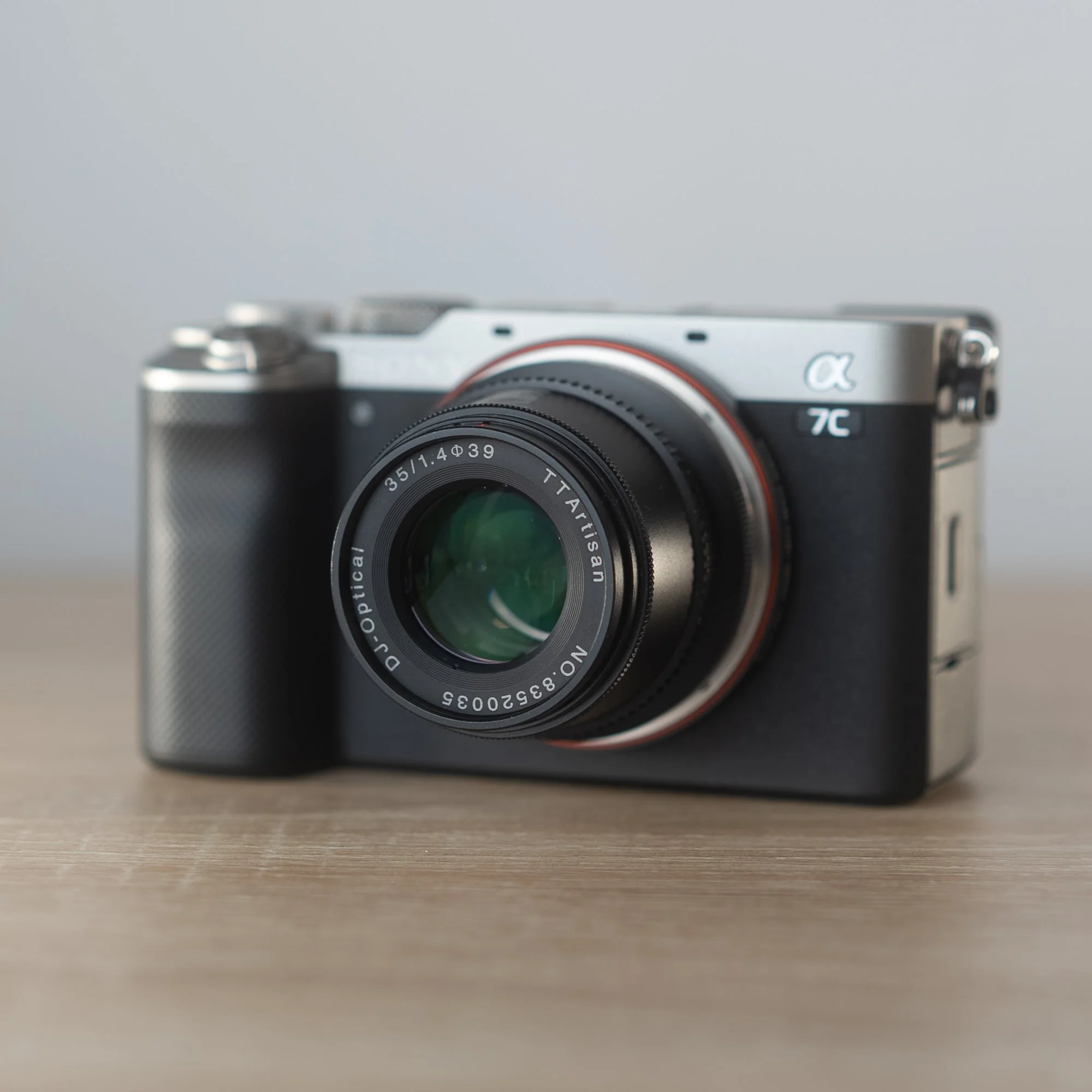
The TTArtisan 35mm f/1.4 is designed for Sony APS-C (crop sensor) cameras like the Sony A6xxx cameras. It’s incredibly compact and has decent handling with the very smooth focusing ring. I tested this lens for over a year with a Sony A6600, Sony A7C, and my trusty Sony A7SIII. For full transparency, TTArtisan sent me this lens to review but they had no influence on my judgement of this lens. If anything I took almost a year to fully produce an in-depth review of their product.
To test the full capabilities of this little lens, I filmed a short documentary/profile video of fellow street photographer Simon Shim.
Filmed entirely on the TTArtisan 35mm f/1.4
Specs
Focal Length: 35mm (52.5mm Full Frame equivalent)
Sony E Mount (Crop Sensor) Also comes in Fuji X, Leica L, M43, Nikon Z, and Canon EF-M mount
Minimum Focus Distance: 28cm/.28m
Max Aperture: f/1.4
Minimum Aperture: f/16
Optics: 7 Elements in 6 Groups; 10 Diaphragm Blades
Weight: 180g
Dimensions (Diameter x Length) 56mm x 44mm / 2.2" x 1.7"
Filter Size: 39mm
Weather Proofing: Unknown (Safe to assume none)
Price: $83 USD on B&H

Build Quality
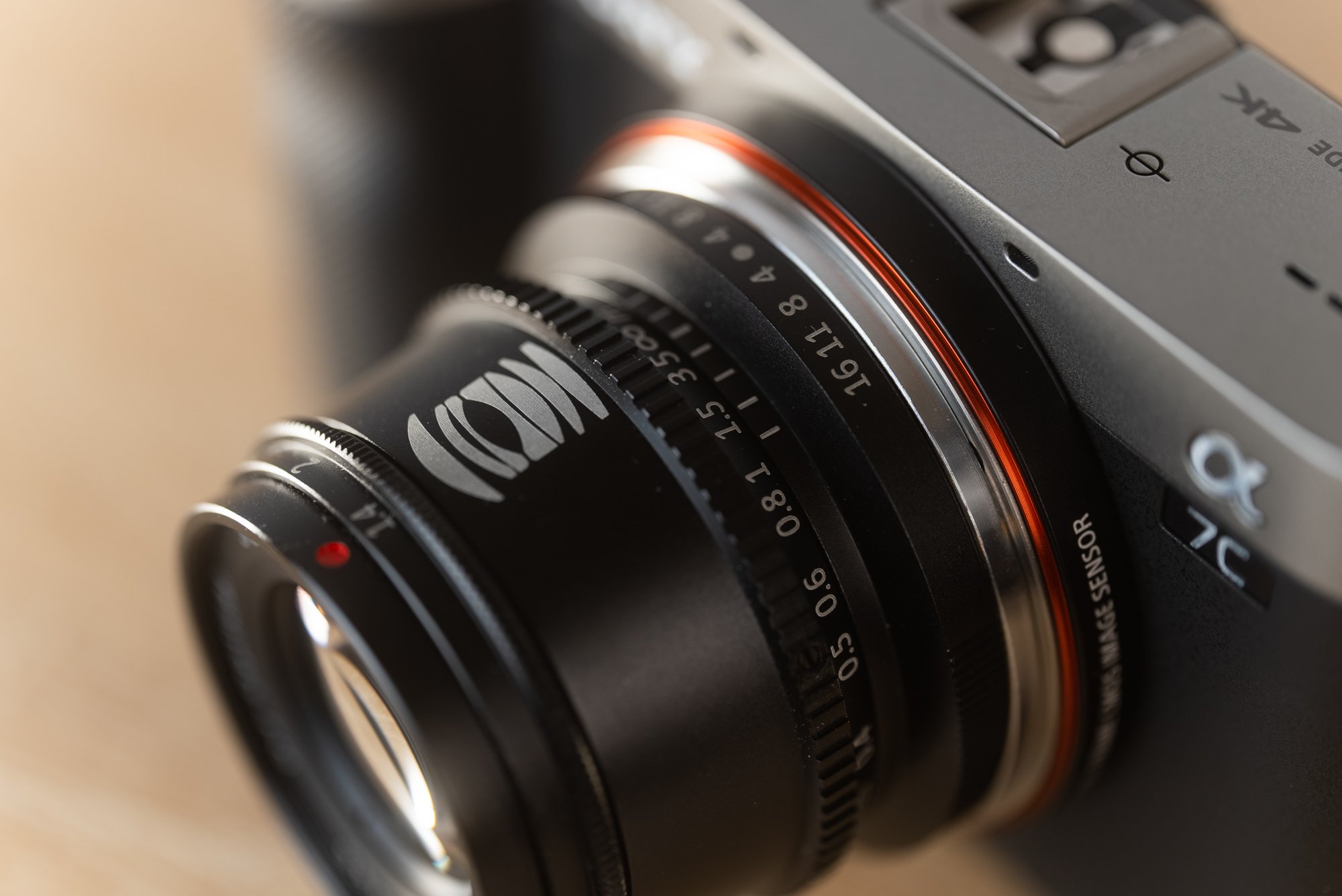
The lens is built out of a sturdy metal construction, which is surprising considering how many modern mirrorless lenses are generally plastic. It weighs more than the Sony 40mm f/2.5 G I reviewed last. To be quite honest, I was surprised at the build quality considering it’s a sub-$100 lens.
It is completely manual focus and has a very well dampened focus ring close to the lens mount that telescopes and then a very clicky aperture ring. The aperture ring is a little quirky at first to use. The aperture control is very thin and a little hard to adjust since there’s very little to grip. The ring moves in half-stops from f/1.4 - f/4 before it goes in full stops between 4, 5.6, 8, and 16. This aperture ring has to be the biggest complaint I have about the otherwise decent lens body. I wish TTArtisan had expanded the grip/gears on the aperture and focus ring.


The glass element construction diagram is shown on the top of the lens barrel and is quite unique. There’s nothing that screams beautiful about this lens , but it does remind me of manual focus film camera lenses from the past. The design seems like an ode to the vintage manual focus lenses from the analog era.
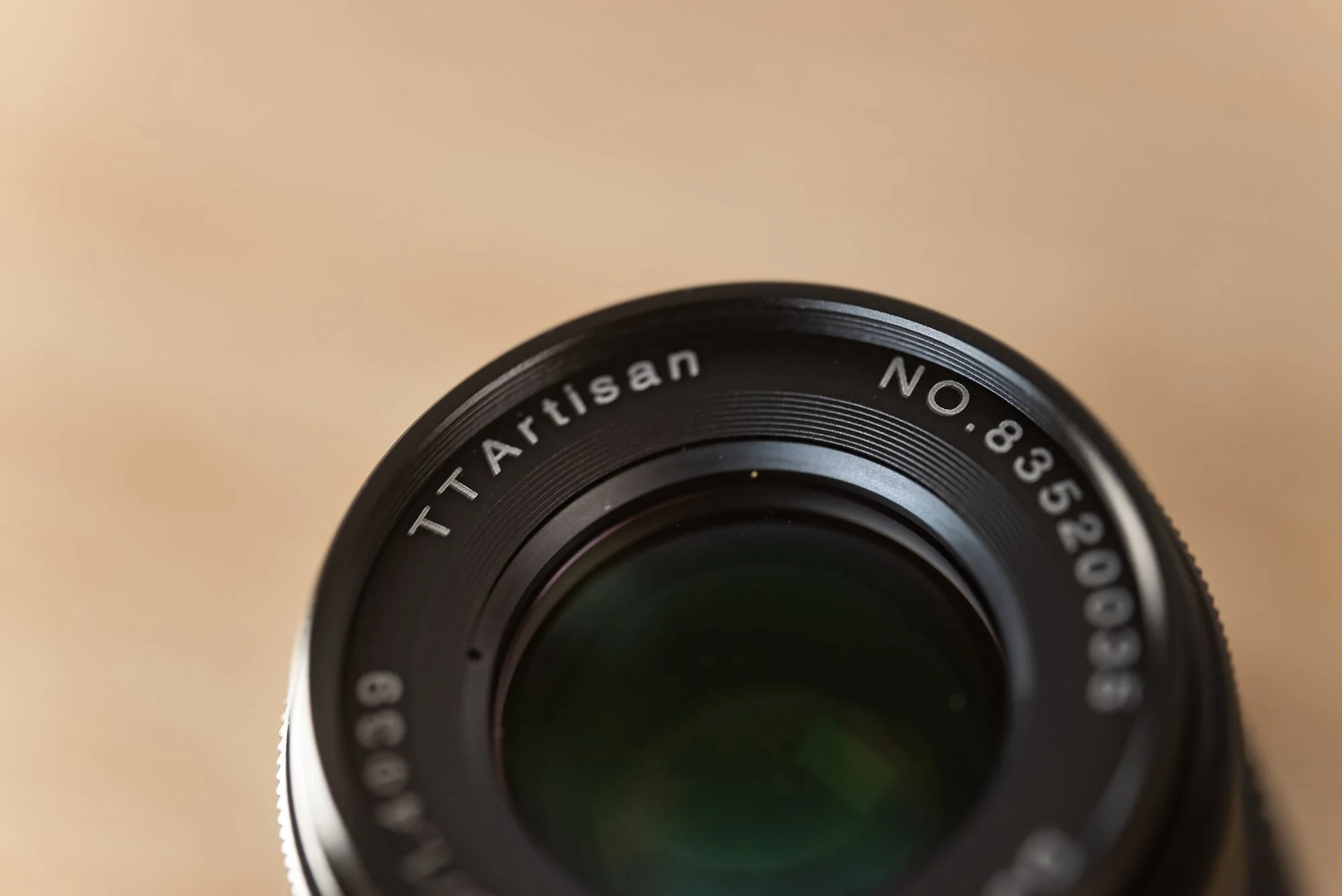
The lens cap is a screw-on metal cap which lends to security of your front element but is quite cumbersome to screw on and off when you want to quickly take photos. The front of the lens also has threads for 39mm filters.

The optical design of this lens consists of 7 glass elements in 6 groups with 10 diaphragm blades which produces decent bokeh. This lens most likely does not have any weather sealing so use with caution in wet or sandy weather conditions. There’s no rubber gasket to protect your camera sensor in the event of rain.
Performance

The TTArtisan 35mm f/1.4 also comes in multiple camera mounts if you have a Fuji X, Canon EF-M, Leica L, M43, or Nikon Z camera. The compact nature of the lens and slim profile of the A7C makes it a fabulous option for discreet street photography. This lens is completely manual so it will slow down your shooting process for better or for worse.


The lens is very soft and almost “dreamy” until you stop down to f/2.8 or f/4. Focusing might be difficult when opened up at f/1.4 but with focus peaking on the modern cameras, this problem can be avoided. This is a 35mm lens for APS-C/Crop Sensor cameras so the Full Frame equivalent is about a 50mm lens.
Vignetting and distortion are problems for this lens, but expected for something so small and affordable. Surprisingly, flaring wasn’t an obvious issue when I used this lens but definitely flared more often than expensive lenses with anti-flare coating.
If you're very strict with your bokeh, you’ll be surprised to see very pleasing bokeh balls in out of focus elements. Now this isn’t saying this is on par with the top of the line lenses, but you’ll get relatively spherical bokeh balls with some obvious cat-eye bokeh in the edges. I don’t detect obvious onion ring effects going on, but there is some “soap bubble” effect happening to the dimmer bokeh balls.


You could probably convince people that these images were from a lens that was 4x or 5x the cost of the TTArtisan 35mm f1/.4
Sample Images
Click on the photo to view a larger image.



Final Thoughts

Overall, this lens surprised me in many ways. The all-metal construction, dedicated aperture ring, max aperture of f/1.4, and decent image quality were all factors that pleased me when shooting.
You’ll appreciate this lens even more if you have experience shooting manual 35mm film cameras that feel and shoot similar to this TTArtisan lens. It’s an obvious ode to vintage metal film lenses of the past and if you shoot photos understanding the image-taking process requires a bit more time, you’ll thoroughly enjoy shooting with this.
Pros:
All metal build quality
Manual aperture ring
Smooth and dampened focus ring
Great focal length for street photography
Opens to f/1.4
Small profile
Cons:
Image quality is decent but not great
Chromatic aberration & sharpness is lacking
Aperture ring is very thin and difficult to use
Mounting and un-mounting this lens is difficult with the small grips
Rating: 2.5/5
I gave the final rating a rather harsh score even though I’d ultimately say I was surprised at the performance of this lens. It felt just ok in the hands, considering the annoyingly small aperture ring. I managed to film a short documentary with this lens so it’s obviously useable in the real world, albeit it takes some time getting used to. If you don’t have much money to spend on lenses and don’t mind shooting on manual lenses, I’d say you should go ahead and try shooting with the TTArtisan 35mm f/1.4. You’re not making a huge commitment spending $83 USD on this lens if you’re not aiming for professional photos!
Providing a B&H Photo Affiliate link if you’d like to purchase the lens so I can use the funds to run my reviews. Thanks!
TTArtisan 35mm f/1.4
Blog
Welcome to my blog, where I share in-depth product reviews and insights from my personal travel experiences.